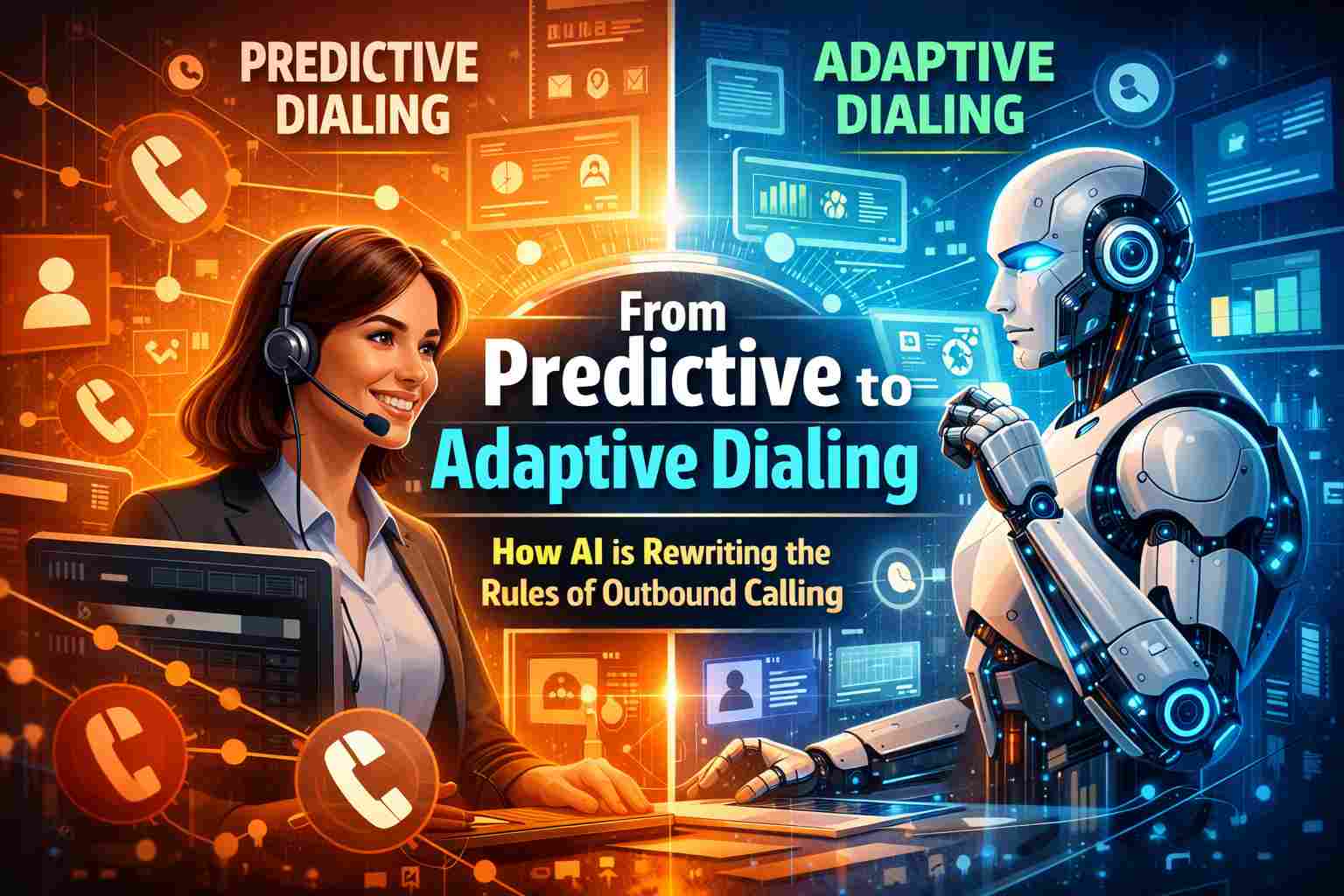
From Predictive to Adaptive Dialing: How AI is Rewriting the Rules of Outbound Calling
Here’s your 2000+ word, SEO-optimized, website-ready blog based on your LinkedIn article 👇
🚀 From Predictive to Adaptive Dialing: How AI is Rewriting the Rules of Outbound Calling :
📌 Introduction: The Evolution of Outbound Calling
Outbound calling has always been a cornerstone of sales, customer engagement, and lead generation. For years, businesses relied heavily on volume—more calls meant more opportunities, and more opportunities meant more conversions.
But as customer expectations evolved and technology advanced, this volume-driven approach began to show cracks.
Customers grew tired of irrelevant calls.
Agents became overwhelmed with repetitive tasks.
And businesses started facing diminishing returns.
This is where a major transformation began.
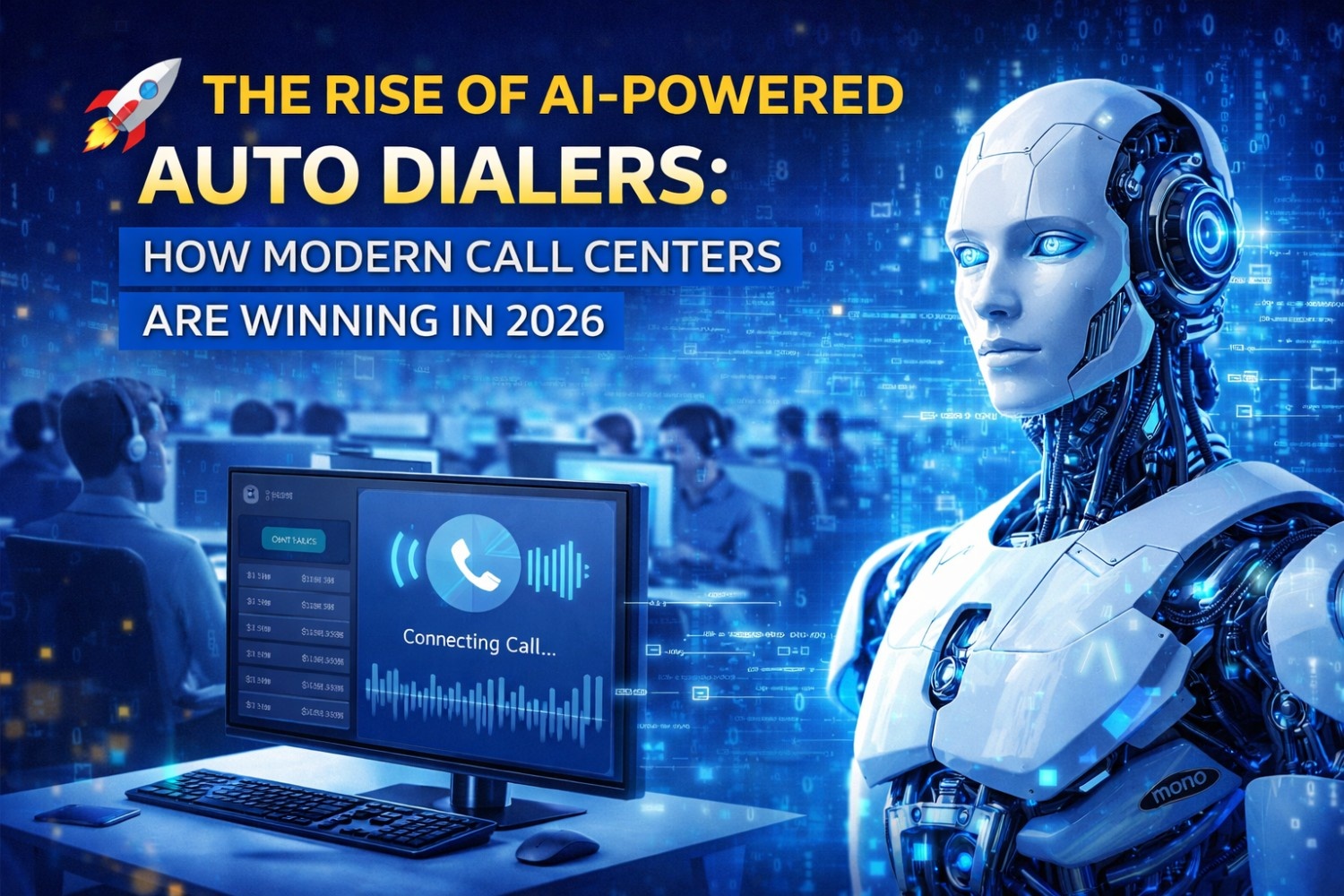
In 2026, outbound calling is no longer about dialing faster—it’s about dialing smarter.
The shift from predictive dialing to AI-powered adaptive dialing is redefining how modern call centers operate, compete, and grow.
📞 Understanding Predictive Dialing: The Old Standard
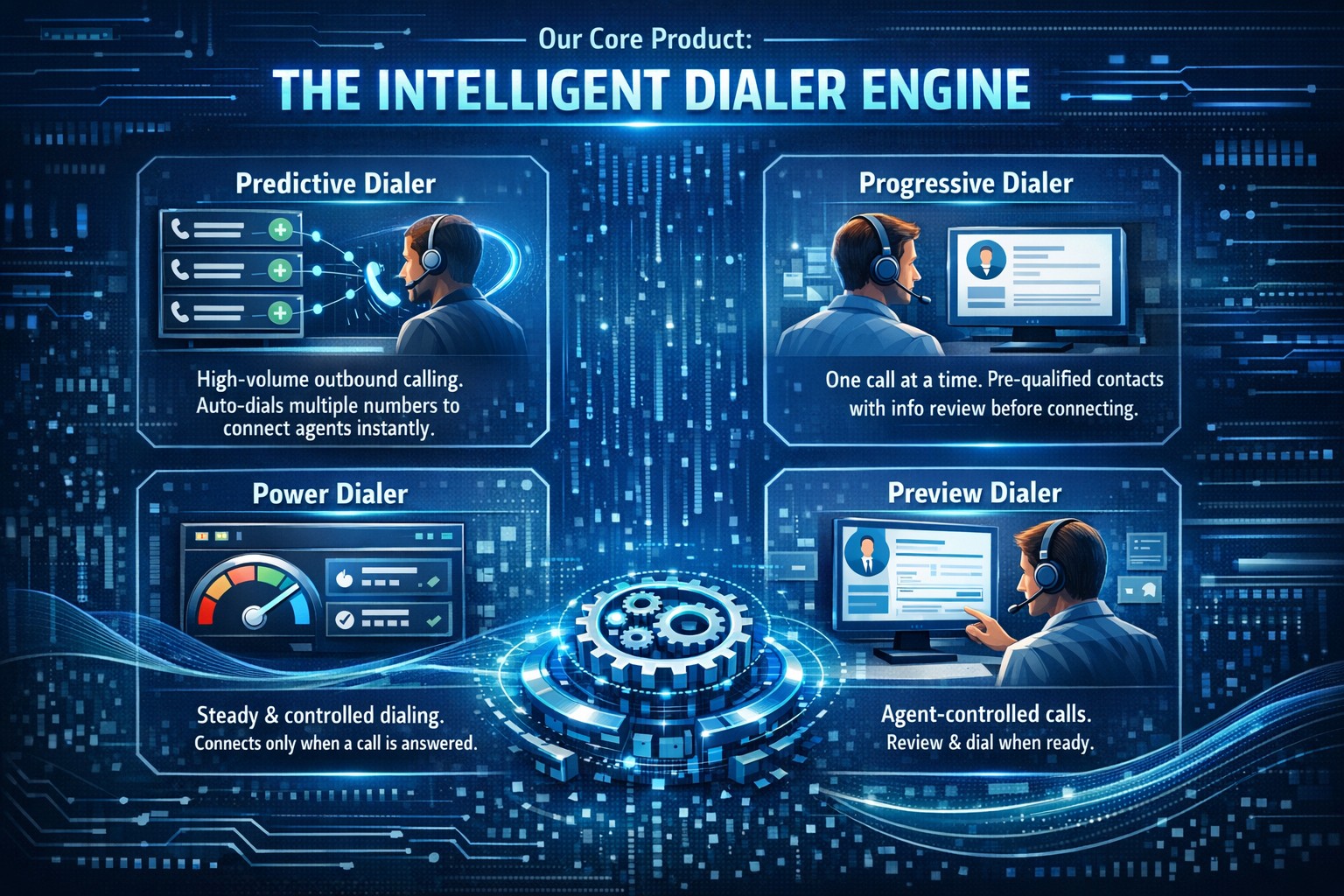
Predictive dialing was once considered revolutionary.
It automated the process of dialing multiple numbers simultaneously and connected agents only when a live person answered. This significantly reduced idle time and improved efficiency.
✅ Key Benefits of Predictive Dialers:
Increased call volume
Reduced agent idle time
Automated dialing process
Higher operational efficiency
However, what worked a decade ago is no longer sufficient today.
❌ The Limitations of Predictive Dialing:
1. Lack of Personalization
Predictive dialers operate on algorithms based on probability—not customer behavior. This often leads to irrelevant interactions.
2. High Call Abandonment Rates
When too many calls are dialed at once, some customers answer but no agent is available—resulting in dropped calls.
3. Poor Customer Experience
Receiving untimely or irrelevant calls creates frustration and damages brand trust.
4. Agent Burnout
Agents are constantly under pressure to handle rapid call flows, leading to fatigue and reduced performance.
5. Compliance Risks
Strict regulations around call timing, consent, and abandonment rates make predictive dialing risky in many markets.
🧠 The Rise of Adaptive Dialing: A Smarter Approach
Adaptive dialing is not just an upgrade—it’s a complete shift in philosophy.
Instead of focusing on how many calls can be made, adaptive dialing focuses on which calls should be made.
Powered by Artificial Intelligence (AI), adaptive dialers analyze vast amounts of data in real-time to optimize every aspect of outbound communication.
🔍 What Makes Adaptive Dialing Different?
Adaptive dialing systems consider:
Customer behavior and preferences
Historical interaction data
Best time to call
Agent performance metrics
Real-time campaign performance
And based on these insights, they make intelligent decisions instantly.
⚡ How AI Powers Adaptive Dialing
AI is the backbone of adaptive dialing systems.
It transforms static calling strategies into dynamic, self-learning processes.
🔹 1. Real-Time Data Processing
AI continuously processes live data from multiple sources, allowing the system to adjust strategies instantly.
🔹 2. Machine Learning Algorithms
These systems learn from past interactions to improve future outcomes—making every campaign smarter over time.
🔹 3. Predictive Analytics (Reimagined)
Unlike traditional predictive dialers, AI uses predictive analytics to enhance decision-making—not just dialing speed.
🔹 4. Behavioral Intelligence
AI understands customer intent, engagement patterns, and responsiveness to optimize outreach.
🎯 Key Benefits of Adaptive Dialing
1. Precision Over Volume
Adaptive dialing prioritizes quality over quantity.
Instead of dialing hundreds of random leads, it focuses on:
High-intent prospects
Verified contact windows
Personalized outreach strategies
👉 Result: Higher conversion rates with fewer calls.
2. Enhanced Customer Experience
Modern customers expect relevance and timing.
Adaptive systems ensure:
Calls are made at convenient times
Messaging aligns with customer needs
Follow-ups are meaningful and timely
👉 Result: Customers feel valued, not interrupted.
3. Improved Agent Productivity
Agents no longer waste time on unproductive calls.
Adaptive dialing:
Connects agents with the right prospects
Reduces idle and repetitive tasks
Enhances focus on high-value conversations
👉 Result: Better performance and job satisfaction.
4. Real-Time Campaign Optimization
Traditional campaigns rely on post-analysis reports.
Adaptive systems optimize in real time:
Adjust dialing pace
Modify targeting strategies
Improve connection rates
👉 Result: Continuous performance improvement without manual intervention.
5. Built-In Compliance and Risk Reduction
AI ensures adherence to regulations by:
Avoiding restricted call times
Tracking customer consent
Reducing abandoned calls
👉 Result: Lower legal risks and stronger brand reputation.
🔄 Predictive vs Adaptive Dialing: A Quick Comparison
| Feature | Predictive Dialing | Adaptive Dialing |
|---|---|---|
| Approach | Volume-based | Intelligence-based |
| Decision Making | Predefined rules | Real-time AI-driven |
| Customer Experience | Often poor | Highly personalized |
| Agent Efficiency | Moderate | High |
| Compliance | Risky | Built-in |
| Optimization | Manual | Automatic |
🏢 Real-World Use Cases of Adaptive Dialing
📈 Sales and Lead Generation
Businesses can prioritize high-quality leads and connect at the right time, increasing conversion rates significantly.
📞 Customer Support Follow-Ups
Adaptive dialing ensures timely follow-ups based on customer history and urgency.
💳 Collections and Payments
AI identifies the best time and approach to contact customers, improving recovery rates.
📊 Market Research and Surveys
Higher response rates due to smarter targeting and timing.
🔮 The Future of Outbound Calling: Autonomous Systems
The future is not just adaptive—it’s autonomous.
AI will soon handle:
Campaign creation
Strategy testing
Script optimization
Performance forecasting
Outbound calling systems will become self-optimizing ecosystems.
This means businesses can:
Launch campaigns faster
Reduce manual effort
Achieve consistent results
👨💼 The Human + AI Collaboration
A common misconception is that AI will replace human agents.
In reality, AI enhances human capabilities.
🔹 The New Role of Agents:
Relationship building
Complex problem solving
Emotional intelligence in conversations
AI handles the repetitive work.
Humans handle the meaningful interactions.
🚧 Challenges in Adopting Adaptive Dialing
While the benefits are significant, implementation requires careful planning.
⚠️ Common Challenges:
Integration with existing systems
Data quality and management
Initial investment costs
Training teams to adapt
However, these are short-term hurdles compared to long-term gains.
🛠️ How to Transition from Predictive to Adaptive Dialing
Step 1: Evaluate Current Systems
Identify gaps in your existing dialing strategy.
Step 2: Invest in AI-Powered Solutions
Choose platforms that offer real-time intelligence and scalability.
Step 3: Integrate CRM and Data Sources
Ensure seamless data flow for better decision-making.
Step 4: Train Your Team
Equip agents and managers with the skills to work alongside AI.
Step 5: Monitor and Optimize
Continuously track performance and refine strategies.
📊 Why Businesses Can’t Ignore This Shift
The competitive landscape is changing rapidly.
Businesses that continue using outdated dialing systems risk:
Losing customers
Lower conversion rates
Reduced operational efficiency
On the other hand, companies adopting adaptive dialing gain:
Competitive advantage
Better ROI
Stronger customer relationships
💡 Final Thoughts
The era of blind dialing is over.
Success in outbound calling now depends on intelligence, timing, and relevance.
Adaptive dialing powered by AI is not just a trend—it’s the future.
Businesses that embrace this shift will not only improve performance but also build deeper, more meaningful connections with their customers.
Because in today’s world…
👉 The best call is not the fastest one.
👉 It’s the smartest one.
Ready to transform your outbound calling strategy?
Upgrade from outdated predictive dialing to AI-powered adaptive dialing and start delivering smarter, more impactful conversations today.
🚀 Don’t just make more calls—make better ones.