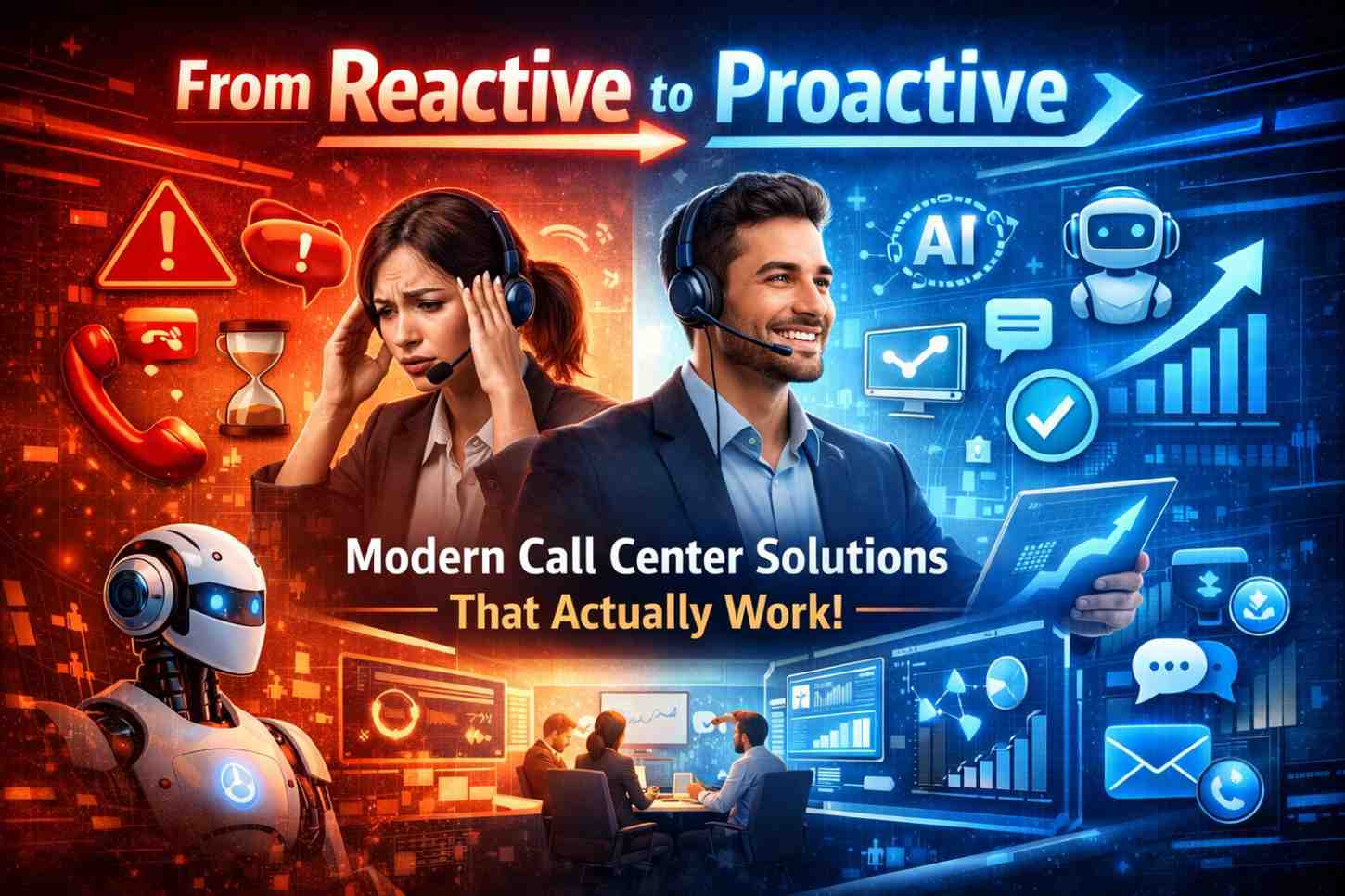
From Reactive to Proactive: Modern Call Center Solutions That Actually Work
Introduction — The Reactive Trap
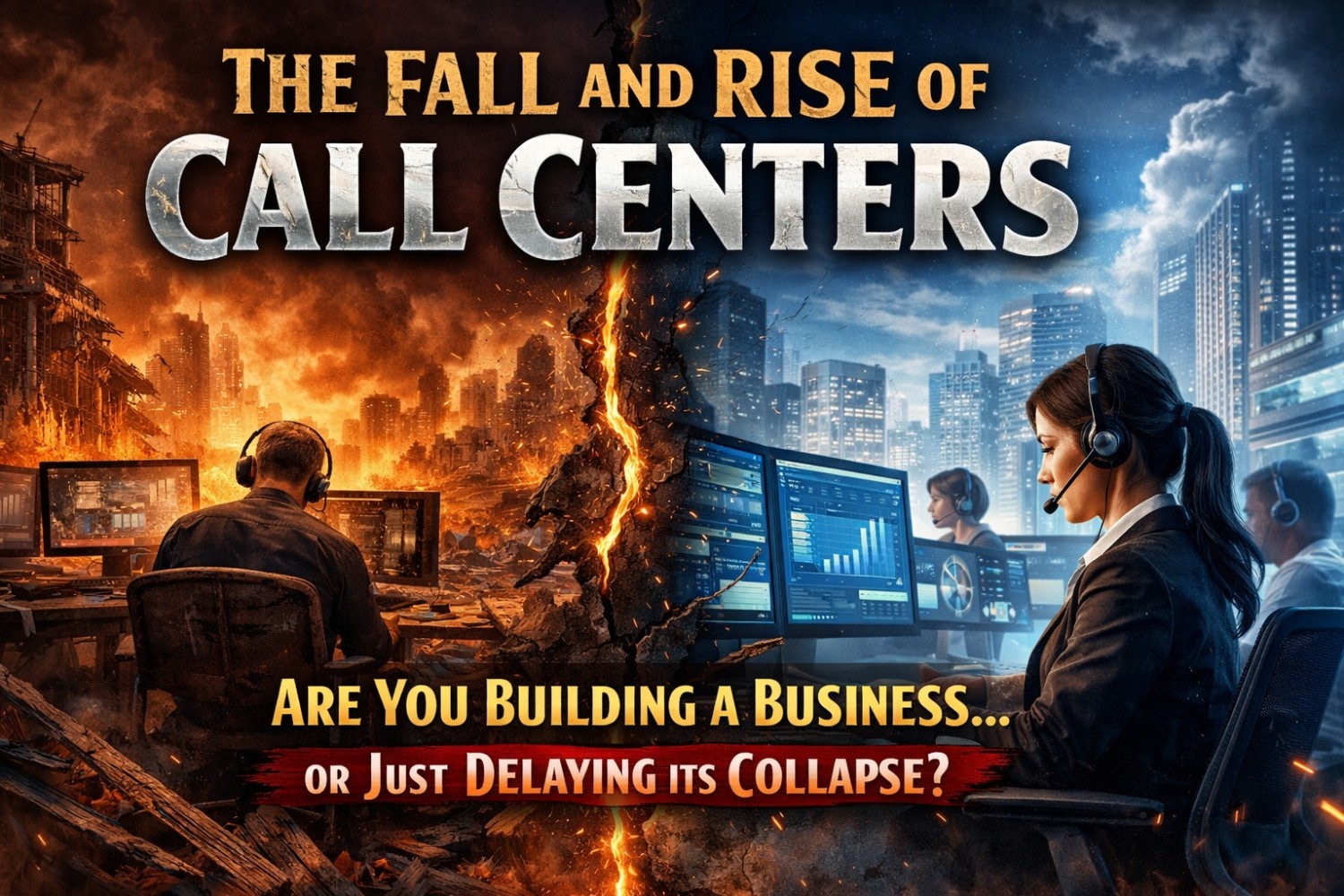
For years, call centers have operated in a reactive mode.
A customer faces an issue → they call support → an agent responds → the problem gets resolved (hopefully).
Sounds simple, right?
But here’s the harsh reality:
Reactive support is expensive, inefficient, and damaging to customer experience.
Customers today don’t want to report problems.
They expect businesses to anticipate, prevent, and resolve issues before they even notice them.
In 2026, customer expectations are shaped by companies that:
- Predict delivery delays before they happen
- Notify users about issues before complaints arise
- Offer solutions before frustration builds
This is where proactive call center strategies come in.
The shift from reactive to proactive isn’t just an upgrade—
👉 it’s a complete transformation of how customer support operates.
📊 The Cost of Being Reactive
Let’s break this down.
Reactive systems create:
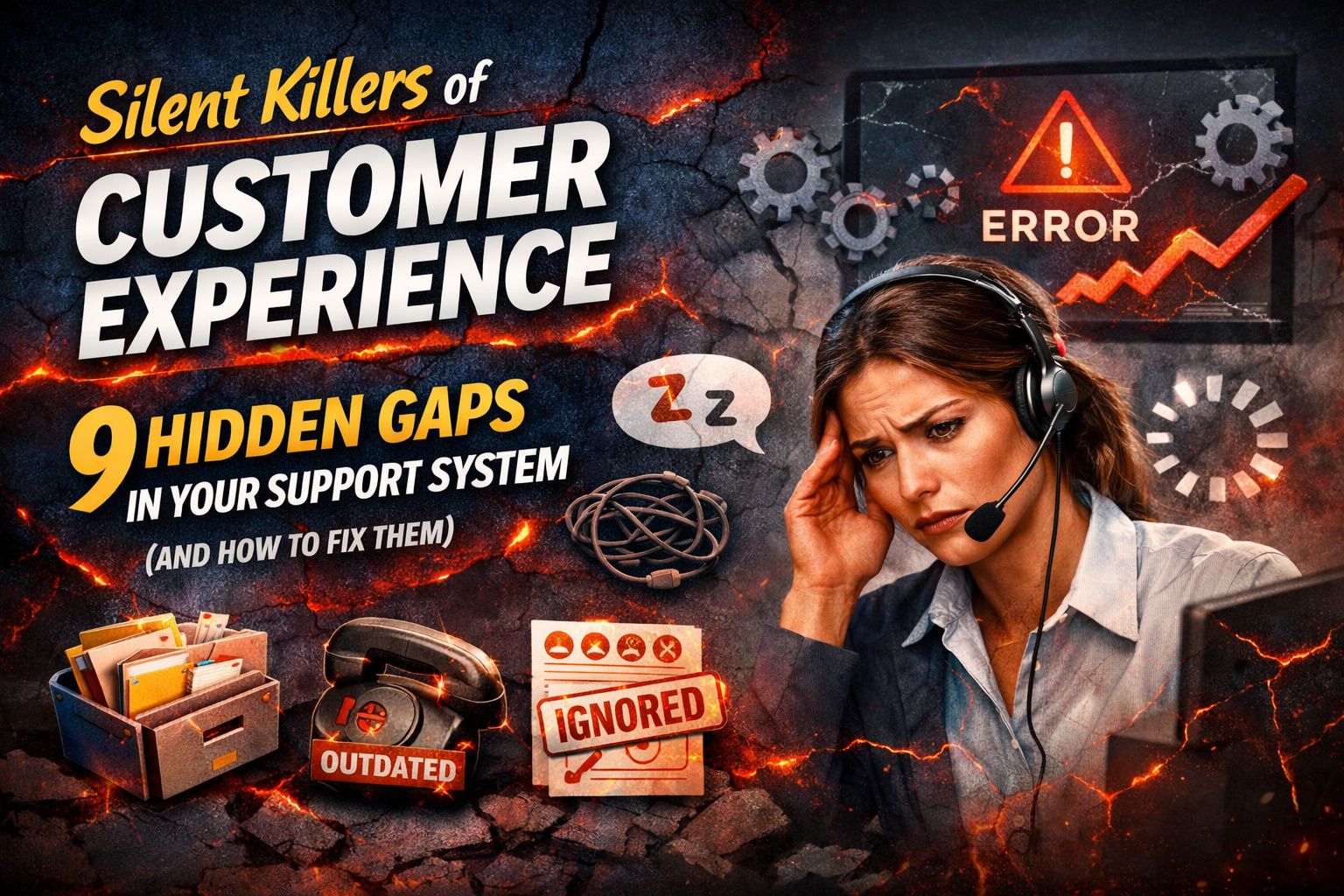
❌ High Operational Costs
- Repeated calls for the same issue
- Long wait times
- Overloaded agents
❌ Poor Customer Experience
- Customers feel unheard
- Problems escalate emotionally
- Brand trust declines
❌ Lost Revenue Opportunities
- No upselling or cross-selling
- Missed engagement moments
- Churn increases silently
📦 Stat Insight
- 70% of customers expect companies to understand their needs proactively
- Businesses using proactive support see 20–30% reduction in call volume
- First-call resolution improves by over 25%
🧠 What Does “Proactive” Actually Mean?
A proactive call center:
✔ Predicts customer issues
✔ Reaches out before complaints
✔ Uses data to guide decisions
✔ Empowers agents with real-time intelligence
Instead of asking:
👉 “How do we fix this issue?”
You start asking:
👉 “How do we prevent this issue entirely?”
⚙️ Intelligent Routing & IVR Modernization
Traditional IVR systems are rigid and frustrating.
“Press 1 for this, Press 2 for that…” — we’ve all been there.
🚫 Problems with Old IVR:
- Static menus
- No personalization
- High call abandonment
✅ Modern IVR + Intelligent Routing
Today’s systems use:
- AI-based intent recognition
- Natural language processing (NLP)
- Customer history integration
💡 What Changes?
Instead of:
“Press 3 for billing”
Customers say:
“I have an issue with my last invoice”
And the system:
✔ Understands intent
✔ Routes instantly
✔ Provides context to agents
🎯 Impact
- Faster resolution
- Reduced call time
- Improved customer satisfaction
🌐 Omnichannel Integration
Customers don’t think in “channels.”
They think in conversations.
❌ Reactive Approach
- Email team works separately
- Chat team works separately
- Call team has no context
Result:
👉 Customers repeat themselves multiple times
✅ Proactive Omnichannel Strategy
All channels are connected:
- Voice
- Chat
- Social media
💡 Key Benefits
✔ Unified customer history
✔ Seamless transitions between channels
✔ Consistent brand experience
🎯 Example
Customer starts with chat → moves to call → agent already knows everything.
No repetition. No frustration.
🤖 AI-Powered Agent Assistance
Your agents are powerful—but only if they’re supported correctly.
❌ Reactive Agent Environment
- Searching for answers manually
- Switching between systems
- Delayed responses
✅ AI-Driven Assistance
Modern systems provide:
- Real-time suggestions
- Auto-generated responses
- Sentiment analysis
- Next-best-action prompts
💡 What This Means
While the agent is talking:
✔ AI suggests solutions
✔ Flags customer sentiment
✔ Recommends upsell opportunities
🎯 Result
- Faster resolutions
- Higher agent productivity
- Better customer satisfaction
📅 Proactive Workforce Management
Most call centers schedule based on historical data only.
That’s reactive thinking.
❌ Traditional Approach
- Fixed shifts
- No real-time adjustments
- Understaffing or overstaffing
✅ Modern Workforce Strategy
Uses:
- Predictive analytics
- Real-time demand forecasting
- AI-based scheduling
💡 Example
System predicts a spike due to:
- Product launch
- Payment cycle
- Seasonal demand
👉 Staffing adjusts before chaos begins.
🎯 Benefits
✔ Reduced wait times
✔ Balanced workloads
✔ Happier agents
📈 Customer Health Scoring & Early Warning Systems
This is where things get powerful.
💡 What is Customer Health Scoring?
It’s a system that tracks:
- Usage patterns
- Complaint frequency
- Payment behavior
- Engagement levels
🚨 Early Warning Signals
- Drop in activity
- Negative sentiment
- Repeated issues
✅ Proactive Action
Instead of waiting for churn:
✔ Reach out early
✔ Offer support
✔ Provide incentives
🎯 Outcome
- Reduced churn
- Stronger relationships
- Increased lifetime value
🎧 QA Reimagined with Speech Analytics
Quality assurance used to be manual.
Listening to random calls = reactive.
❌ Old QA Model
- Sample-based monitoring
- Delayed feedback
- Missed insights
✅ Speech Analytics + AI
Now you can:
- Analyze 100% of calls
- Detect keywords & emotions
- Identify compliance risks
💡 What You Gain
✔ Real-time quality monitoring
✔ Agent coaching opportunities
✔ Customer insight at scale
🎯 Impact
- Improved compliance
- Better training
- Enhanced CX
🛠 Practical Roadmap: From Reactive to Proactive (3 Phases)
🟢 Phase 1: Foundation
Start with:
- CRM integration
- Basic omnichannel setup
- Data centralization
👉 Goal: Single source of truth
🟡 Phase 2: Intelligence Layer
Add:
- AI-based routing
- Predictive analytics
- Agent assist tools
👉 Goal: Smarter operations
🔵 Phase 3: Full Proactive System
Implement:
- Customer health scoring
- Automated outreach
- Real-time decision systems
👉 Goal: Predict & prevent issues
⚡ Key Takeaways
- Reactive support is outdated
- Proactive systems reduce costs and increase satisfaction
- AI + data = smarter decisions
- Customer experience is the real differentiator
🧩 Conclusion
The future of call centers isn’t about answering more calls.
It’s about needing fewer calls in the first place.
Businesses that shift from reactive to proactive will:
✔ Deliver better customer experiences
✔ Reduce operational costs
✔ Build long-term loyalty
And most importantly—
👉 They’ll stay ahead in a hyper-competitive market.
If your call center is still reacting to problems instead of preventing them…
It’s time to evolve.
👉 Upgrade to AI-powered proactive call center solutions
👉 Transform your customer experience strategy
👉 Turn every interaction into an opportunity
Start building a smarter, proactive support system today.