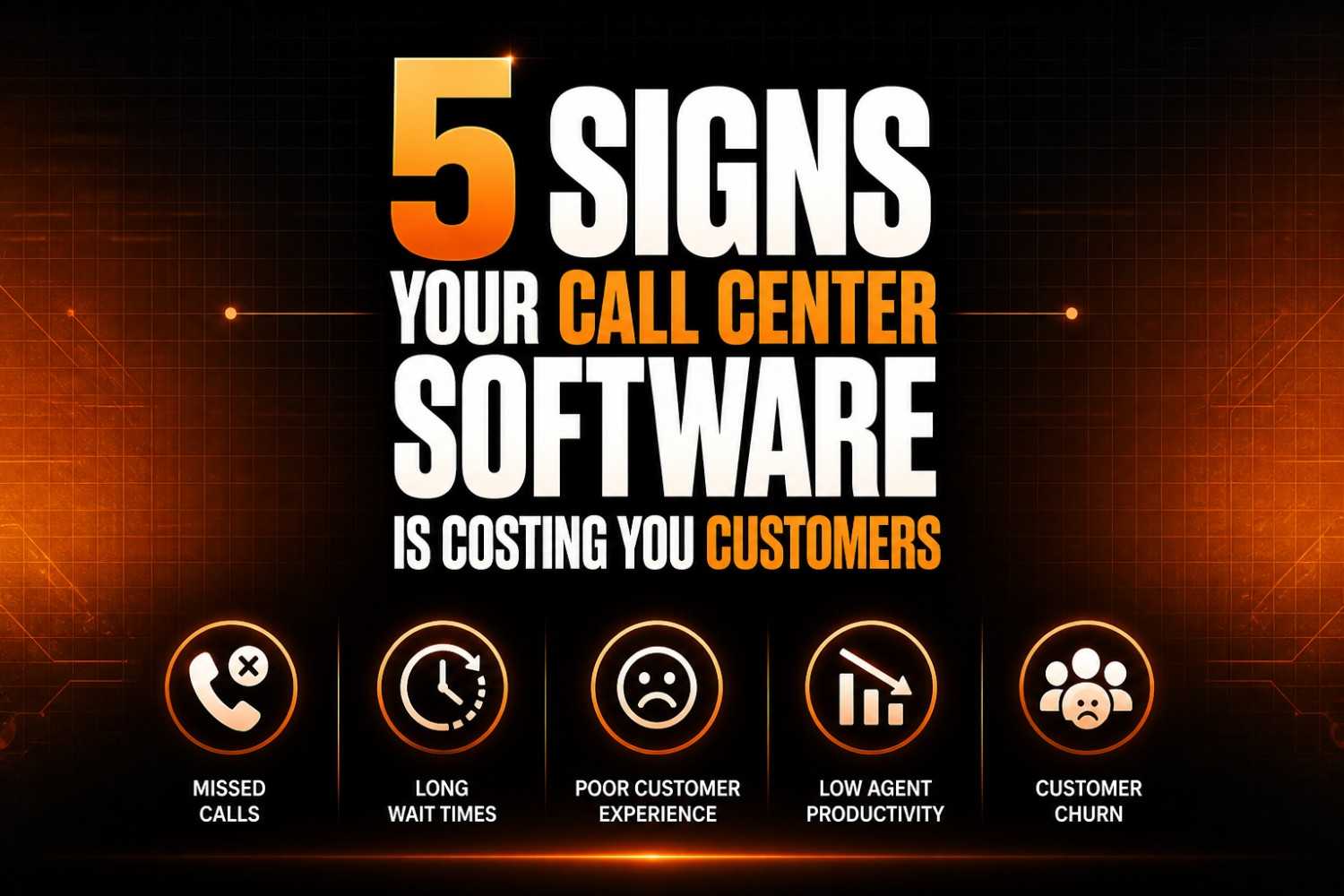
5 Signs Your Call Center Software Is Costing You Customers
Introduction
Let me ask you something uncomfortable.
When was the last time you called a company's support line and actually enjoyed the experience? If you're struggling to remember, you're not alone. Most people dread calling customer support — the long holds, the endless transfers, the repeating yourself three times to three different agents. It's exhausting.
Now flip the perspective. What if your customers feel exactly the same way when they call you?
Here's the hard truth that most business owners and customer service managers don't want to face: your call center software might be the silent killer of your customer relationships. Not your products. Not your prices. Not even your agents. The technology they're working with every single day.
The global call center software market is worth billions of dollars for a reason — because when it works right, it transforms customer experience. But when it works wrong, or when you're running on outdated systems that haven't kept up with the times, it bleeds customers quietly. No dramatic exit. No angry email. They just... don't come back.
In this post, we're going to break down the five biggest signs that your call center software is actively costing you customers — and what you can actually do about it before it's too late.
Why Your Software Choice Matters More Than You Think
Before we dive into the signs, let's establish something important. Customer service is no longer just a support function. It's a competitive differentiator. According to research, after just one bad customer service experience, a huge percentage of customers say they would consider switching to a competitor. After two bad experiences? Most of them are already gone.
And the wild part is that many of those "bad experiences" aren't caused by rude agents or wrong answers. They're caused by technology failures — slow systems, dropped calls, missing customer data, clunky interfaces that make agents look incompetent even when they're trying their best.
Your agents can only be as good as the tools they're working with. If the software is fighting against them, your customers feel that friction every single time they pick up the phone.
So let's talk about the signs you need to watch for.
Sign #1: Your Average Handle Time Is Going Up — But Agent Effort Isn't Going Down
Average Handle Time, or AHT, is one of the most closely watched metrics in any call center. It measures how long it takes to resolve a customer interaction from start to finish. And while keeping it low is important, what's more telling is why it's high in the first place.
Here's a scenario that plays out in call centers every single day.
A customer calls in about a billing issue. The agent picks up, greets them, and then… spends the next 90 seconds logging into two different systems, pulling up the account in one platform, cross-referencing transaction history in another, and fumbling between browser tabs just to get a complete picture of who they're talking to. Meanwhile, the customer is sitting there listening to keyboard clicks and silence.
That's not an agent problem. That's a software problem.
When your call center software isn't properly integrated — when your CRM doesn't talk to your billing system, when your ticketing tool lives in a separate universe from your telephony platform — agents are forced to piece together customer information manually. Every. Single. Call.
This leads to:
Longer calls because agents are searching for information instead of solving problems. Frustrated customers who can hear that something isn't working right on the other end. Burned out agents who spend their shifts fighting with technology instead of helping people. Higher error rates because agents are juggling too many systems at once.
The fix isn't to pressure your agents to work faster. The fix is to give them a unified platform where customer data, interaction history, and account details all live in one place — where information pops up automatically when a call comes in, so agents can focus on the conversation, not the data hunt.
If your AHT has been creeping upward and your agents are working harder than ever but results aren't improving, stop looking at your team first. Look at their tools.
Sign #2: Customers Are Repeating Themselves — Over and Over Again
Nothing — and I mean absolutely nothing — makes a customer more furious than having to explain their problem multiple times to multiple people.
Think about it from their perspective. They called last Tuesday. Explained everything to the first agent. Got transferred. Explained it again. Got disconnected. Called back. Explained it a third time to a new agent who has zero context about the previous conversation. At this point, they're not just frustrated. They're questioning why they're even a customer.
This is one of the clearest signs that your call center software is failing you, and it shows up in two specific ways.
First, poor call transfer functionality. When a call is transferred from one agent to another, what information travels with it? In outdated systems, the answer is: nothing. The customer lands with a new agent who has a blank screen and no context. The customer has to start from scratch. This isn't just annoying — it signals to your customer that your company doesn't have its act together.
Modern call center software should allow agents to add real-time notes that transfer with the call, provide a warm handoff where the first agent can brief the second, and show the new agent the complete interaction history instantly.
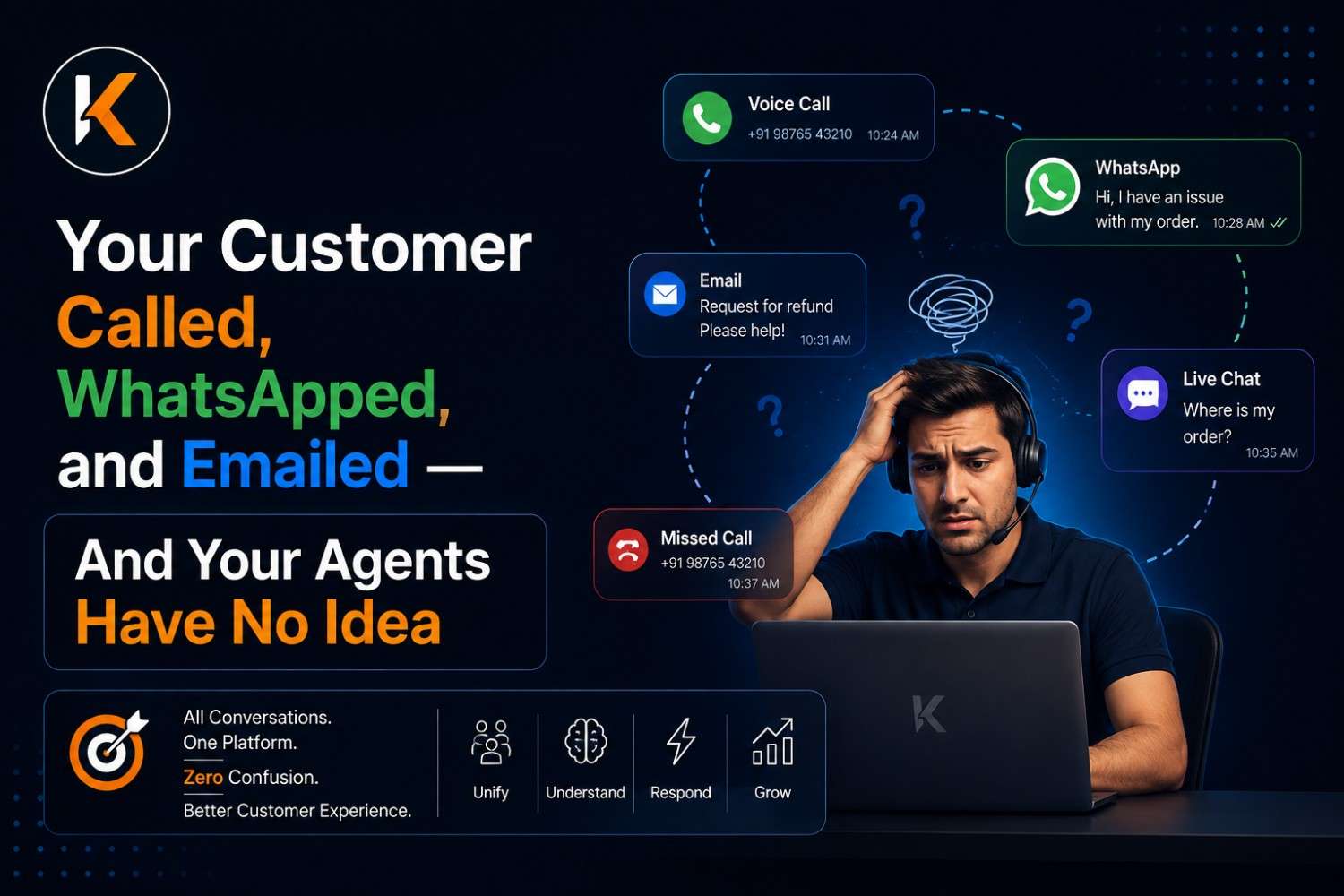
Second, no omnichannel memory. A customer emails on Monday, calls on Wednesday, and chats online on Friday. In a disconnected system, each of those touchpoints exists in isolation. The phone agent has no idea about the email. The chat agent doesn't know what was resolved on the call. And so the customer tells their story again and again.
When customers repeat themselves, they lose confidence in your company. They start to feel like they don't matter. And companies that make customers feel like they don't matter don't keep those customers for long.
If you're hearing complaints like "I already told someone this" or "I've called three times about this same issue" — your software is failing your customers before your agents even get a chance to help them.
Sign #3: You Have Data, But You Can't Actually Use It
Here's a paradox that's surprisingly common in call centers: they're drowning in data but starving for insight.
Your call center generates enormous amounts of information every single day. Call recordings. Agent performance metrics. Customer satisfaction scores. First call resolution rates. Average hold times. Abandonment rates. Peak call volumes by hour, by day, by season. This data is gold — if you can access it, understand it, and act on it in time.
But many call center software platforms make this nearly impossible.
Maybe your reporting is built in a system that requires a dedicated analyst to run even basic queries. Maybe your real-time dashboards are delayed by hours, so by the time you see a spike in call volume, the damage is already done. Maybe your data lives in different platforms that don't communicate, so you're always working with an incomplete picture.
When you can't use your data effectively, several things start to go wrong for customers.
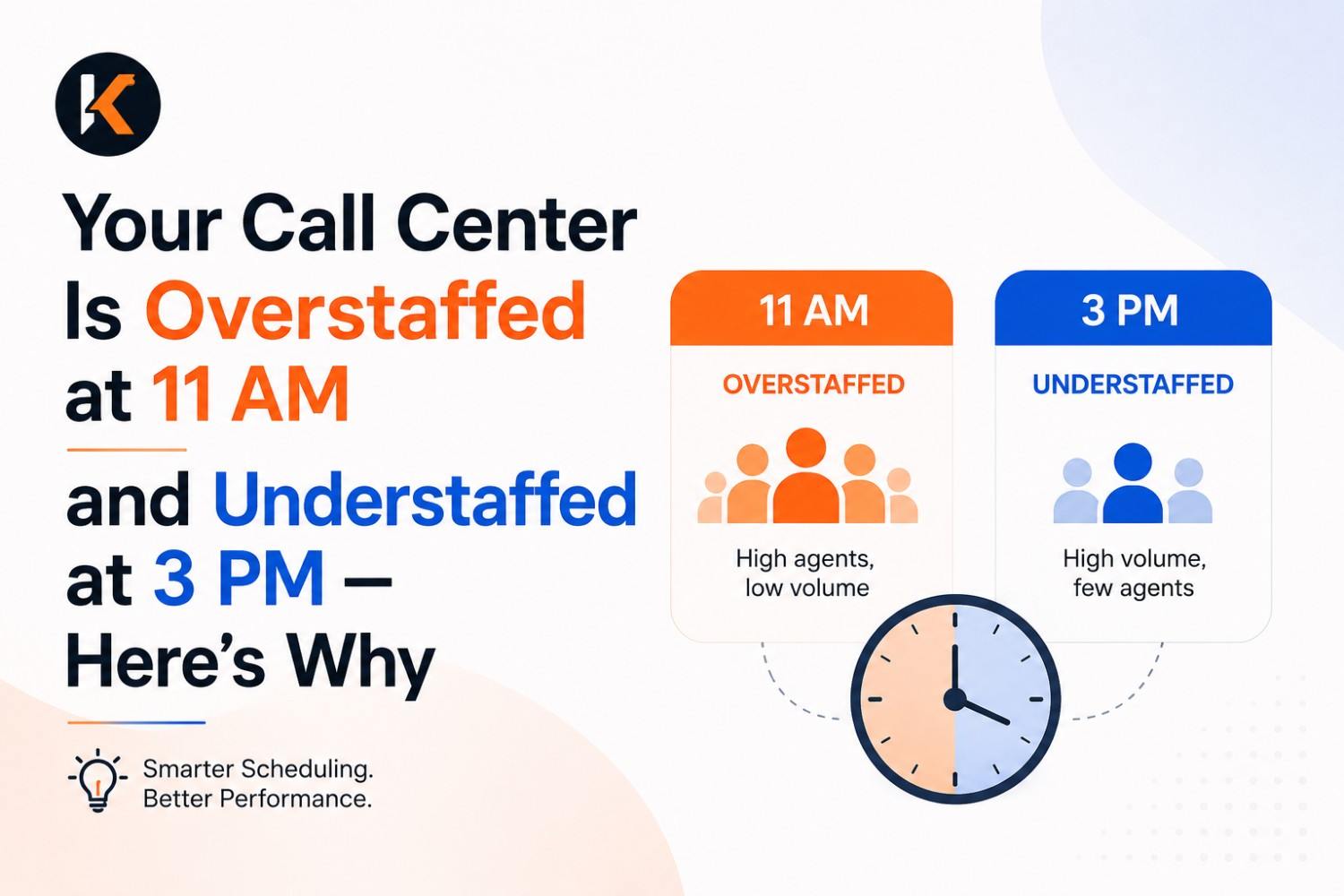
Staffing becomes a guessing game. Without accurate forecasting based on historical patterns, you either overstaff (wasting budget) or understaff (leaving customers on hold for 20 minutes because there aren't enough agents available). Long hold times are one of the top reasons customers hang up and never call back.
Quality issues go undetected. If you can't quickly analyze call recordings or flag interactions that scored low on satisfaction surveys, small problems grow into big ones. An agent who's been mishandling a certain type of complaint for three weeks continues to do so because nobody caught it in the data.
You react instead of prevent. Without predictive analytics, you're always one step behind. You find out there's a problem after it's already cost you customers, not before you could have stopped it.
The best call center software today doesn't just collect data — it makes that data visible, actionable, and timely. Supervisors should be able to see live metrics on a single screen. Reports should be generatable in minutes, not days. AI-powered tools should flag at-risk calls or coaching opportunities automatically.
If your leadership team is making decisions based on gut feeling because pulling the actual data is too painful, your software is holding your entire operation back — and your customers are paying the price.
Sign #4: Your Agents Are Constantly Saying "I'll Have to Put You on Hold"
Hold time is the great customer experience destroyer.
Nobody calls a company hoping to listen to hold music. Every second a customer spends on hold is a second they're deciding whether this relationship is worth it. Research consistently shows that hold time is one of the most cited reasons customers leave a company. And yet, so many call centers have it baked into their normal workflow — not because their agents are slow, but because their software forces it.
Here's how bad software creates an epidemic of unnecessary holds.
No access to knowledge bases. When an agent needs to look up a policy, escalation procedure, or technical answer, where do they go? If the answer is "a separate system they have to navigate while the customer waits," that's a software problem. Modern call center platforms integrate knowledge bases directly into the agent interface, so answers are searchable in real-time without ever leaving the conversation.
Manual process triggers. In outdated systems, tasks like creating a ticket, processing a refund, or scheduling a callback require agents to navigate multiple steps in multiple screens. Each of these processes forces a hold. In integrated modern platforms, many of these actions can happen in one or two clicks without interrupting the conversation.
No self-service options for routine tasks. A significant chunk of calls to most call centers are about things customers could resolve themselves — checking a balance, tracking an order, resetting a password — if they had the right tools. Smart call center software includes robust IVR (Interactive Voice Response) systems and self-service portals that deflect these routine calls entirely, freeing agents to focus on complex issues where they can genuinely add value. If your IVR is outdated or frustrating and pushes everyone to an agent regardless of their need, you're creating volume that buries your team.
Slow system response times. This one is simple but devastating. If your software is slow — if screens take several seconds to load, if searches take forever, if the system lags between actions — your agents put customers on hold while they wait for technology to catch up. This is inexcusable in 2025, and if it's happening in your center, it signals infrastructure that's past its useful life.
Every unnecessary hold is a small erosion of customer trust. Some customers will tolerate it once. Most won't tolerate it repeatedly. If "I'll have to put you on hold for a moment" is a phrase your customers hear regularly, your software is manufacturing a problem that shouldn't exist.
Sign #5: Your Software Can't Keep Up With Customers' Channel Preferences
This one might be the biggest sign of all, and it's the one most businesses underestimate until it's too late.
Customer communication preferences have shifted dramatically. Yes, phone calls still happen — plenty of them. But customers today also expect to reach you through live chat, email, social media, SMS, and increasingly through messaging apps. And more importantly, they expect those channels to work together seamlessly.
If a customer starts a conversation on chat and then decides to call in, they don't want to start over. If they sent an email two days ago and haven't heard back, they want the agent they call to know that. If they prefer to text rather than hold, they want that option available.
Call center software that only handles phone calls — or that treats every channel as a completely separate silo — is already behind the times. And the consequences are serious.
You miss customers where they actually are. Younger customer segments in particular increasingly prefer non-voice channels. If your center can only serve them well by phone, you're creating friction at the very first point of contact. Some of those customers simply won't bother calling — they'll just go to a competitor who lets them chat.
Disconnected channels create chaos for agents. When your phone system, email client, chat tool, and social monitoring tools are all separate applications with no shared view, agents are working in a constant state of overload. They're context-switching constantly, losing track of interactions, and inevitably making mistakes that frustrate customers.
You can't see the full customer journey. If a customer had a negative experience via email last week and then calls today, the phone agent has no idea. Without that context, they can't acknowledge the previous issue, can't be prepared for a potentially frustrated customer, and can't take the extra step to repair the relationship. Every missed connection like this is a missed opportunity to build loyalty.
Response times suffer across the board. When channels aren't unified, it's easy for messages to fall through the cracks. A chat message sits unanswered for two hours because the agent team was swamped with calls. An email gets lost because it came in during a shift change. Without unified queuing and visibility, things slip — and customers notice.
The solution is a true omnichannel platform that brings all communication channels under one roof, with unified customer profiles, shared interaction histories, and consistent service quality regardless of how a customer chooses to reach you.
If your call center software was built in the era when phone calls were the only option, it's not equipped for the world your customers actually live in today.
What Happens When You Ignore These Signs
Let's be real about what's at stake here.
Every customer you lose to a bad software experience represents not just one lost sale but a lifetime of potential revenue walking out the door. And in the age of online reviews, one frustrated customer can influence the purchasing decisions of dozens or even hundreds of others.
The companies winning at customer service right now are not necessarily the ones with the friendliest agents or the cheapest products. They're the ones who have invested in technology that makes every interaction smoother, faster, and more personal. They're the ones whose agents show up to every call with full context and the right tools. They're the ones who can spot a problem in their data on Tuesday and fix it by Thursday.
Meanwhile, companies running on outdated, disconnected, or underperforming call center software are working twice as hard for half the results — and losing customers to competitors who simply make it easier to get help.
What to Do Next
If you recognized your operation in any of these five signs, here's a straightforward action plan.
Start with an audit. Pull your actual data. Look at AHT trends, hold times, transfer rates, first call resolution rates, and channel performance. Let the numbers tell you where the friction is happening, not your intuition.
Talk to your agents. The people using the software every day know exactly where it's breaking down. Ask them what slows them down, what information they wish they had, what tasks are frustrating because of the tools. Their answers will be a goldmine.
Map your customer journey. Trace the path a customer takes from first contact to resolution across every channel you support. Identify every point where they might have to wait, repeat themselves, or feel like the company isn't prepared for them.
Evaluate modern alternatives. The call center software market has advanced significantly in the last few years. Cloud-based platforms with built-in AI, real-time analytics, omnichannel support, and seamless integrations are more accessible and affordable than ever before. You don't need to be an enterprise with a massive IT budget to get great technology.
Prioritize integration. Whatever platform you choose or upgrade to, make sure it connects with your existing CRM, ticketing system, and communication tools. Unified data is the foundation of everything else.
Your call center is often the most direct, human-to-human touchpoint between your brand and your customers. It's where loyalty is built or destroyed. Where frustrated customers become loyal advocates — or where they quietly decide to move on.
The agents you hire, the scripts you write, the training you deliver — all of it matters. But none of it can fully compensate for software that's working against you and against them.
If you've been treating your call center technology as a fixed cost to be minimized rather than a strategic investment to be optimized, this is your sign to reconsider. The right software doesn't just make your agents' jobs easier. It makes every customer feel heard, valued, and well-served — and that is worth more than almost any other investment you can make.
The signs are there. The question is whether you'll act on them before your customers do.
Don't wait for another bad review. Don't wait for another lost customer. Act now.
👉 Book Your Free Demo Today and see exactly how the right call center software can work for your business — no pressure, no commitment, just a clear picture of what's possible.