Introduction: The Way We Talk at Work Is Changing Forever
There was a time when business communication was simple — you had a desk phone, a fax machine, and maybe an intercom system. Everyone worked in the same building, and if you needed to reach a client, you picked up the landline and dialed. That was it.
That time is gone.
Today, your sales rep in Delhi is closing a deal with a client in Dubai while your customer support team is handling tickets from a co-working space in Bangalore. Your marketing team is on a Zoom call, your ops head is sending voice notes on WhatsApp, and your CEO is reviewing recorded sales calls from his phone on a flight.
Business communication has exploded — across devices, time zones, and platforms. And the businesses that are keeping up aren't doing it with legacy hardware or on-premise PBX systems. They're doing it with cloud-based communication.
This isn't a trend. It's a fundamental shift in how modern businesses operate, sell, and serve customers. In this article, we're going to break down why cloud communication is the future, what it actually means for your business, and how you can start moving in that direction before your competition leaves you behind.
What Is Cloud-Based Business Communication?
Before we get into why it matters, let's be clear about what it actually is.
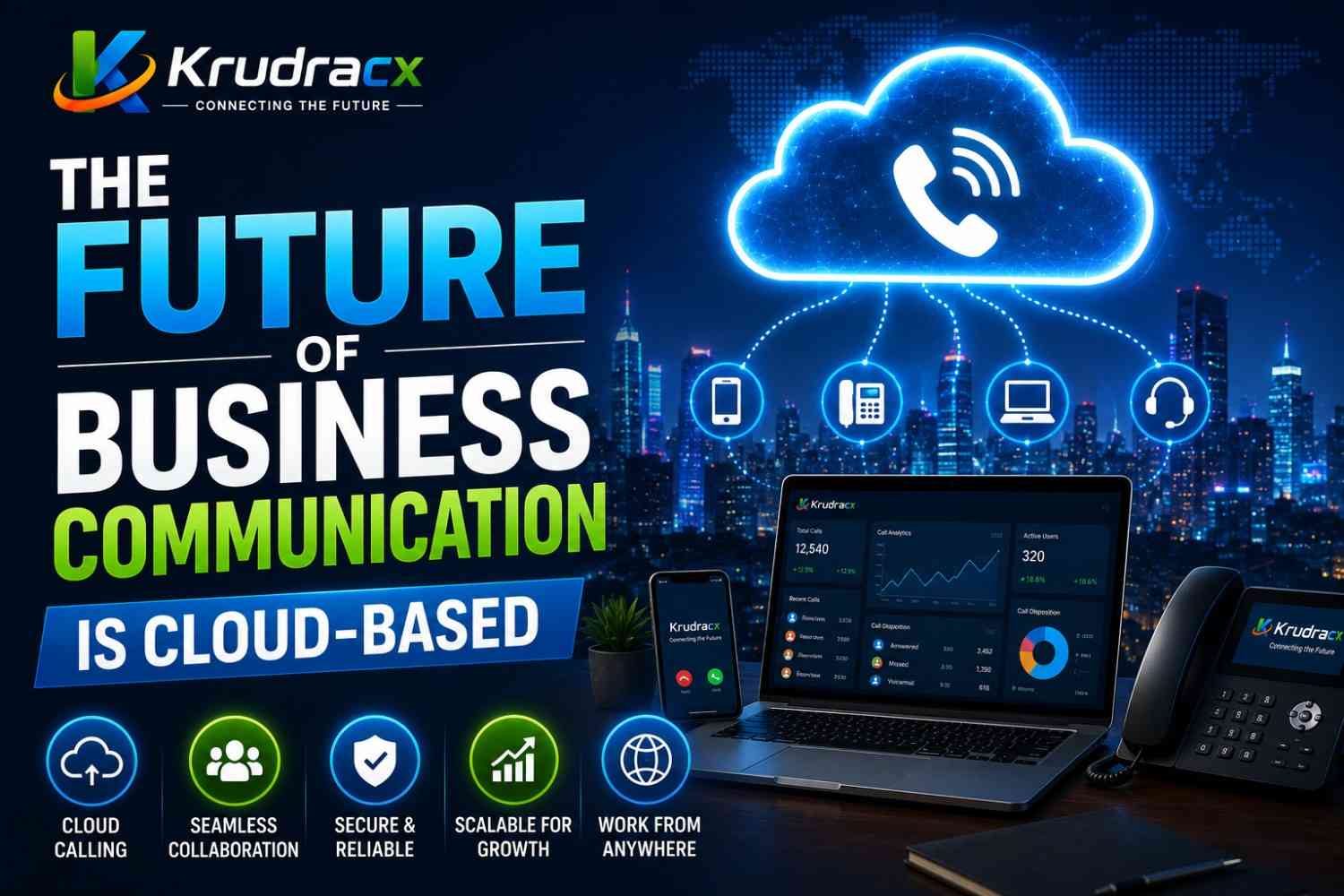
Cloud-based business communication refers to any communication tool or system that operates over the internet — hosted on remote servers rather than on physical hardware in your office. This includes:
- Cloud calling / VoIP (Voice over Internet Protocol) — making and receiving business calls over the internet instead of traditional phone lines
- Unified Communications as a Service (UCaaS) — a single platform that combines calling, messaging, video conferencing, and file sharing
- Cloud contact centers — customer support infrastructure hosted entirely in the cloud
- Team messaging platforms — tools like Slack, Microsoft Teams, and Google Chat
- Video conferencing tools — Zoom, Google Meet, Webex
- AI-powered communication tools — transcription, call summarization, sentiment analysis, and more
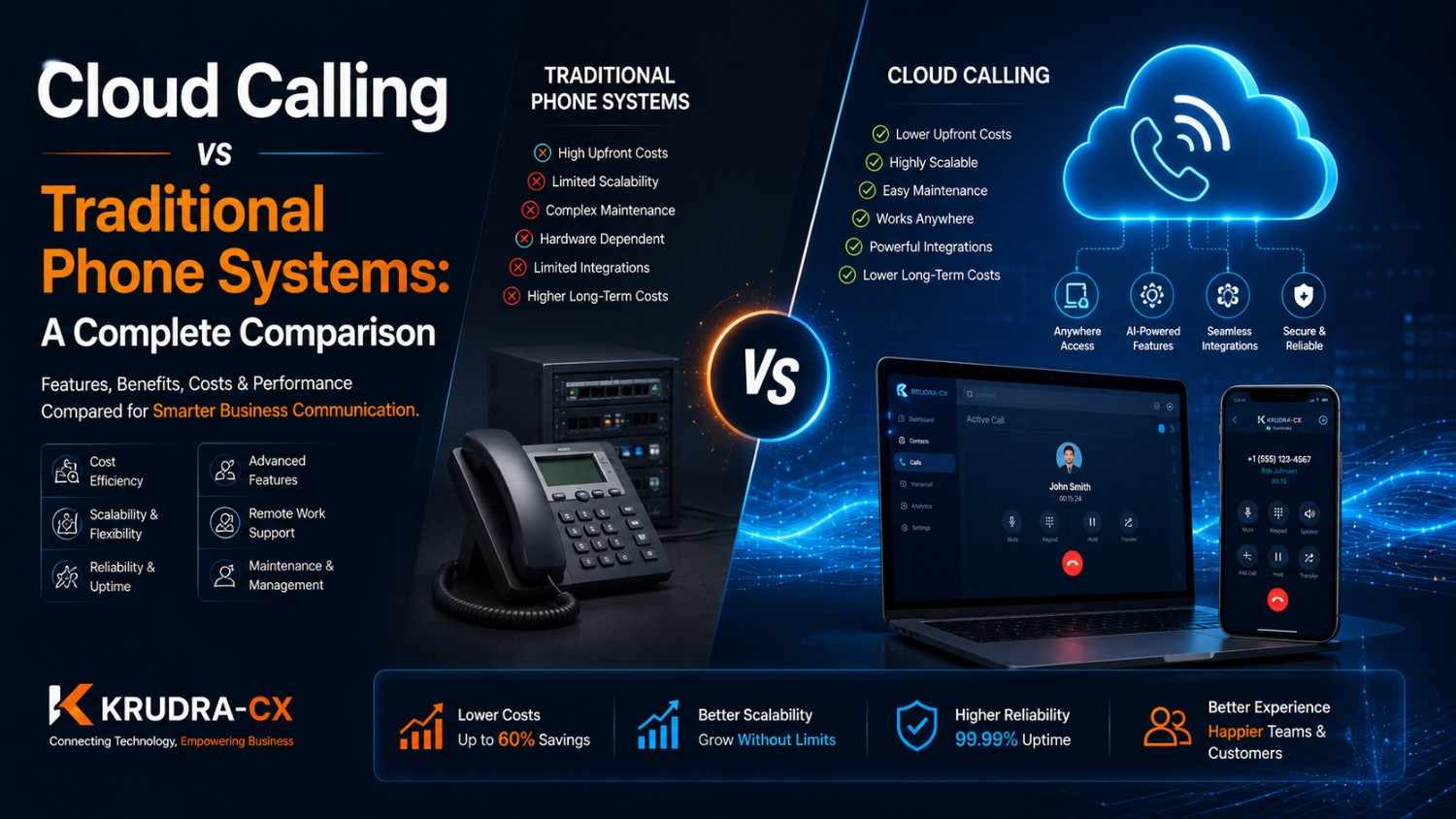
The key difference from traditional systems? There's no physical hardware to install, no expensive maintenance contracts, and no dependency on being in a specific physical location. Everything lives in the cloud and is accessible from anywhere with an internet connection.
Why the Old System Is Breaking Down
To understand why cloud communication is taking over, you need to understand why the old system is failing modern businesses.
1. The office is no longer the center of work
The pandemic permanently changed where people work. Remote work, hybrid models, and distributed teams are now the norm across industries. Legacy communication systems were built for a world where everyone sat in the same office. They're fundamentally ill-equipped for a world where your team is spread across cities, countries, and time zones.
A traditional PBX phone system tied to a physical office doesn't just create inconvenience for remote teams — it creates a hard ceiling on how your business can grow and operate.
2. The cost of hardware is unsustainable
Traditional phone infrastructure requires expensive upfront hardware, IT support to maintain it, and costly upgrades every few years. For a growing business, this isn't just inconvenient — it's a serious drain on capital. You're paying for physical assets that depreciate, require maintenance, and become obsolete faster than ever.
3. There's no data
This is the one that kills B2B sales and customer service operations the most. Traditional phone systems give you almost zero usable data. You don't know which calls converted, how long reps spent on the phone, what objections kept coming up, or what your best-performing conversations sounded like. You're flying blind.
In an era where data drives every other business decision, your communication system being a black box is an enormous competitive disadvantage.
4. It doesn't scale
Adding a new team member to a traditional phone system means hardware, setup time, and often a physical presence in a specific location. Cloud systems let you add a new user in minutes from anywhere in the world. For fast-growing businesses, this difference is massive.
The Cloud Communication Revolution: What's Actually Happening
Here's what's happening in the market right now. The global cloud communication market was valued at over $18 billion in 2023 and is projected to exceed $60 billion by 2030. That isn't growth — that's an industry transformation.
Every major enterprise — from banks to retail chains to SaaS companies — is actively migrating away from legacy communication infrastructure and towards cloud-first, integrated communication stacks. And it's not just the big players. Small and mid-sized businesses are making the switch faster than ever because the tools are now accessible, affordable, and simple to deploy.
The reason this shift is accelerating comes down to three forces hitting at the same time:
Remote and hybrid work becoming permanent — Businesses now need communication tools that work the same whether someone is in the office, at home, or on the road. Cloud tools were built for exactly this.
AI becoming embedded in communication tools — Artificial intelligence is transforming what's possible in business communication. Real-time transcription, call summarization, sentiment analysis, predictive routing, and AI coaching for sales reps — none of this is possible with traditional systems.
The rise of the customer experience economy — Customers today expect fast, seamless, personalized communication. They don't want to be put on hold for 15 minutes. They want to reach you on the channel they prefer, get a quick and informed response, and feel like you know who they are. Cloud-based contact centers and CRM-integrated calling make this possible at scale.
Key Benefits of Cloud-Based Communication for Modern Businesses
Let's get specific about what you actually gain when you move to cloud communication.
1. Flexibility and Mobility
Your team can work from literally anywhere. A sales rep can make a business call from their mobile phone and it shows up as the company number. A support agent can handle customer queries from home with the same tools they'd use in the office. This flexibility isn't just convenient — it's a hiring advantage. You can recruit talent from anywhere without worrying about physical infrastructure.
2. Significant Cost Reduction
Businesses that switch to cloud communication consistently report 40–60% reductions in their communication infrastructure costs. The shift from a CapEx model (buying hardware) to an OpEx model (paying a monthly subscription) frees up capital and makes costs predictable. You pay for what you use, and you scale up or down as needed.
3. Seamless CRM and Tool Integration
This is one of the biggest wins for B2B sales teams. Cloud calling platforms integrate directly with your CRM — whether that's Salesforce, HubSpot, Pipedrive, or Zoho. Every call is automatically logged. Contact records are updated in real time. Your reps don't have to manually enter notes after every conversation, and your managers have complete visibility into pipeline activity without chasing anyone for updates.
4. AI-Powered Insights
Modern cloud communication platforms are packed with AI capabilities that were unimaginable just a few years ago. Call transcriptions give you a searchable, readable record of every conversation. AI summaries pull out the key points, action items, and next steps automatically. Sentiment analysis tells you how customers are feeling during interactions. Conversation intelligence tools identify what your top performers say differently from the rest of the team — and help you replicate it.
For sales leaders, this is transformational. Instead of riding along on calls or listening to random recordings, you get data-driven insights across your entire team at scale.
5. Reliability and Uptime
Counter-intuitively, cloud systems are often more reliable than on-premise systems. Enterprise-grade cloud communication providers operate with 99.99% uptime SLAs, redundant data centers, and automatic failover. If your office internet goes down, calls route to mobile. If a server has an issue, traffic automatically shifts to a backup. Your physical hardware simply cannot offer this level of resilience.
6. Rapid Scalability
Whether you're opening a new office, launching a new sales team, or hiring 50 support agents, cloud communication scales instantly. No hardware orders. No IT projects. No waiting. New users are live in minutes, and the system handles the increased load automatically.
7. Better Customer Experience
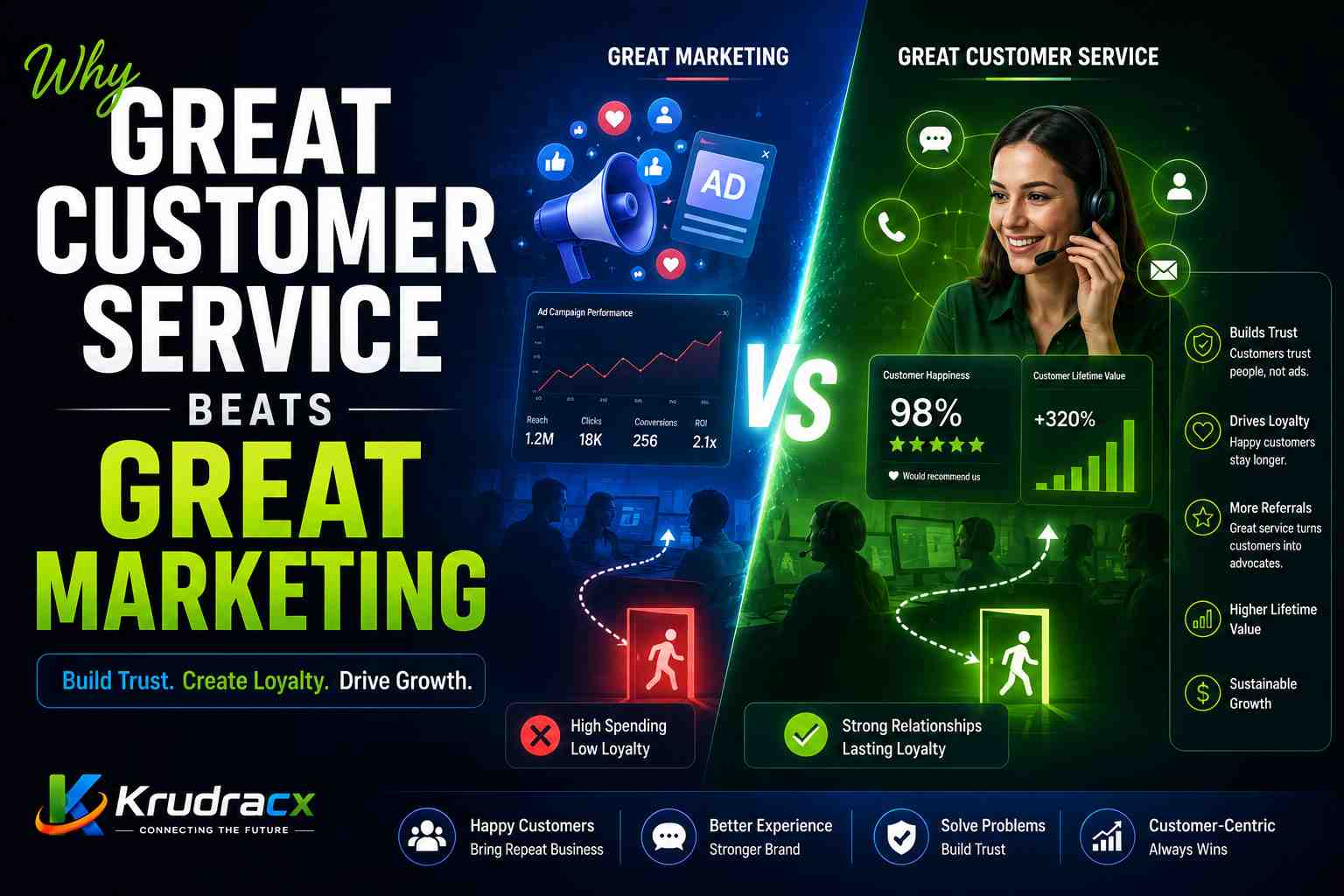
When your communication tools are integrated, intelligent, and data-driven, your customers feel the difference. Calls get routed to the right person immediately. Agents have the customer's full history in front of them before they say hello. Wait times go down. First-call resolution rates go up. And when customers feel heard and served efficiently, they stay longer and buy more.
Cloud Communication and the B2B Sales Function
For B2B sales teams specifically, the move to cloud communication is not optional — it's a competitive necessity.
Think about the modern B2B sales cycle. It involves multiple touchpoints, multiple stakeholders, long decision timelines, and an enormous amount of phone-based communication. The businesses winning in B2B sales right now are not just the ones with the best product or the most aggressive outreach. They're the ones that have the best systems.
Here's how cloud communication specifically transforms B2B sales:
More calls, better calls. Cloud calling with power dialers and click-to-call functionality can triple the number of calls a rep makes per day. More conversations mean more pipeline. But it's not just about volume — AI coaching tools help reps improve their talk-to-listen ratio, handle objections better, and close more consistently.
Never lose a lead to a missed call. With intelligent call routing, missed call workflows, and voicemail-to-text features, no inbound lead falls through the cracks. If a prospect calls outside business hours, they get an automated response, a callback is scheduled, and the rep gets a notification. The system works even when your team doesn't.
Full pipeline visibility for managers. Sales managers no longer have to rely on reps self-reporting activity. Call data flows directly into the CRM. Managers can see exactly how many calls were made, how long they lasted, what the outcomes were, and which deals are moving. Coaching becomes specific and evidence-based instead of anecdotal.
Shorter sales cycles. When reps have context before every call — knowing the prospect's history, their previous interactions, and where they are in the funnel — conversations are more relevant and move faster. Deals close in fewer touches.
What the Best Cloud Communication Stack Looks Like
There isn't one tool that does everything — the best setups combine a few well-integrated platforms:
Cloud calling platform: Tools like Aircall, RingCentral, or Zoom Phone handle your business telephony. Look for CRM integrations, call recording, analytics dashboards, and AI features.
Video conferencing: Zoom or Google Meet for demos, team meetings, and client calls that benefit from face-to-face interaction.
Team messaging: Slack or Microsoft Teams for internal communication, keeping email out of day-to-day collaboration.
CRM: Salesforce, HubSpot, or Pipedrive as the central record of all customer interactions. Your calling platform should sync with this automatically.
Conversation intelligence: Tools like Gong or Chorus.ai sit on top of your calls and provide deep AI-driven analysis — identifying deal risks, coaching opportunities, and competitive intelligence at scale.
When these tools are connected and working together, you have a communication stack that doesn't just facilitate conversations — it turns every conversation into intelligence that makes your business smarter over time.
Common Objections — and the Real Answers
"We've used the same phone system for years and it works fine."
Fine is not a competitive advantage. Your competitors are not staying fine. They're moving to systems that give them data, scale, and AI — and the gap is widening every quarter. Fine today means behind tomorrow.
"Cloud calling isn't as reliable as a traditional landline."
This was a valid concern five years ago. It isn't today. Enterprise cloud communication platforms run on redundant infrastructure with better uptime guarantees than most physical systems. The bigger reliability risk is now sticking with aging hardware that has no backup plan.
"It's too expensive to switch."
The math almost always goes the other way. When you factor in hardware costs, IT maintenance, limited scalability, and the revenue impact of poor communication tools, most businesses find that cloud communication pays for itself within the first year. The subscription cost is a fraction of what legacy infrastructure actually costs when you add everything up.
"Our team won't adapt."
Modern cloud communication tools are designed to be intuitive. Most platforms look and feel like the consumer apps your team already uses every day. Onboarding typically takes hours, not weeks. And the AI features that handle transcription, summarization, and note-taking actually reduce the work your team has to do — they don't add to it.
How to Make the Switch: A Practical Roadmap
Moving to cloud communication doesn't have to be disruptive. Here's a simple framework:
Step 1: Audit your current communication setup. Map out every tool, every phone number, every user, and what it's currently costing you in time and money. Identify the biggest pain points.
Step 2: Define what you actually need. Not every business needs every feature. Start with your core requirements — number of users, integrations you need, call volume, and whether you need contact center functionality.
Step 3: Choose your platform. Evaluate 2–3 options. Most providers offer free trials. Test the call quality, the CRM integration, the analytics dashboard, and the onboarding experience.
Step 4: Integrate before you go live. Connect your cloud calling platform to your CRM before your team starts using it. This ensures data flows from day one and reps don't have to change habits later.
Step 5: Train your team. Keep it simple. Focus on the 20% of features that will deliver 80% of the value. Advanced features can come later once the team is comfortable.
Step 6: Measure and optimize. Set baseline metrics on day one — call volume, connection rates, conversion rates, and customer satisfaction scores. Review monthly and use the data to coach and improve.
The Road Ahead: Where Cloud Communication Is Going
We're still in the early innings of what cloud communication will become. Here's where things are heading over the next 3–5 years:
AI will move from assistant to active participant. Real-time AI coaching during live calls will become standard — giving reps prompts, surfacing relevant information, and flagging risks as conversations happen.
Omnichannel will become the baseline expectation. Customers will expect seamless handoffs between phone, chat, email, and social — with full context maintained across every channel. Cloud platforms will be the infrastructure that makes this possible.
Predictive communication will emerge. AI will analyze customer behavior and proactively recommend the best time to reach out, the best channel, and even the best message — based on everything it knows about that individual.
Security and compliance will get stronger. As more sensitive business communication moves to the cloud, enterprise-grade encryption, compliance recording, and data sovereignty tools will become non-negotiable — and cloud providers are already building for this.
The businesses that will win in this environment are the ones building on cloud infrastructure today — because they'll be positioned to adopt each new capability as it arrives, rather than scrambling to catch up from legacy systems.
Conclusion
Business communication is not going back to the way it was. The shift to cloud-based systems isn't a technology upgrade — it's a fundamental rethinking of how businesses connect with customers, coordinate teams, and use data to compete.
The companies pulling ahead right now aren't necessarily the ones with the biggest budgets or the most reps. They're the ones with the best systems — systems that give every conversation context, turn every call into data, and let every team member perform at their best regardless of where they are in the world.
Cloud communication is that system. And the window to get ahead of your competition is still open — but it won't be for long.
Ready to turn your phone system into a revenue engine?
Follow @krudracx on Instagram for weekly B2B sales strategy, tech breakdowns, and growth frameworks built for modern sales teams. Drop a comment or DM with "CLOUD" and get a free recommended stack based on your team size and CRM.
The future of your business communication starts with one decision. Make it today.