There's a leak in your business. It's not in your marketing budget. It's not in your product. It's in the way your customers feel when they interact with you — and most business owners never even see it happening.
Every single day, customers leave businesses without saying a word. No complaint email. No angry review. They just stop coming back. They take their money elsewhere, tell their friends, and quietly become your competition's most loyal buyers.
This is the silent killer of small and medium businesses. And it has a name: poor customer service.
In this blog, we're going to go deep. We're going to look at the real numbers, the psychology behind why customers leave, the compounding financial damage that nobody talks about, and — most importantly — exactly what you can do to reverse it before it's too late.
Why Customer Service Is Actually Your Most Important Marketing Channel
Before we get into the costs, we need to reframe something.
Most business owners think of customer service as a department — a cost center. Something you staff up, keep running, and hope doesn't create problems. A necessary evil.
That framing is costing you millions.
Customer service is not a department. It is the single most powerful marketing channel your business has. Because every interaction your team has with a customer is either building brand equity or destroying it. There's no neutral ground. Every touchpoint is a message. And that message either says "we value you" or "you're just a transaction to us."
When customers feel valued, they come back. They upgrade. They refer friends. They become advocates who do your marketing for free. When they feel like just another number, they leave — and they warn others.
The businesses that understand this don't think of customer service as something that happens after the sale. They build the entire customer journey around exceptional service. Every email, every onboarding flow, every support ticket, every follow-up call — it's all part of the brand experience.
And the businesses that get this right? They spend less on advertising, have lower customer acquisition costs, and grow faster with smaller teams.
What "Poor Service" Actually Looks Like
Let's get specific, because "poor customer service" sounds vague. It's easy to dismiss it as something that happens to bad companies — not yours.
But poor service is rarely dramatic. It's almost never one catastrophic failure. It's usually a collection of small frictions that accumulate until a customer reaches a breaking point.
Here's what it actually looks like in the real world:
Slow response times. A customer messages your business on Instagram or sends an email. They wait 24, 48, 72 hours. No response. By the time you reply, they've already bought from someone else — and they've told two friends about the experience.
Inconsistent information. Your website says one thing. Your sales team says another. Your support team says a third. The customer feels confused and distrustful. Confusion kills confidence. And without confidence, people don't buy — or they buy and then feel buyer's remorse.
No follow-up after purchase. A customer buys your product or service. You take the money. Then nothing. No check-in. No "how's it going?" No request for feedback. They feel forgotten the moment the transaction is complete. That's not a customer relationship. That's a vending machine interaction.
Defensiveness when things go wrong. Something breaks, gets delayed, or doesn't match expectations. Instead of acknowledging it and fixing it fast, your team gets defensive. They explain why it wasn't their fault. They make the customer feel like they're being difficult. This is relationship poison. The customer doesn't care whose fault it is. They care about feeling heard and getting it resolved.
Scripted, robotic communication. Support emails that start with "Dear Valued Customer" and end with "Your satisfaction is our priority" while solving nothing in between. Customers can smell copy-paste responses from a mile away. It signals that you don't actually care — you're just going through the motions.
Not remembering repeat customers. A customer has bought from you four times and contacts support. They have to explain who they are, what they bought, and what their issue is from scratch. Every time. This communicates one thing very clearly: you are not important enough for us to remember.
Each of these individually might seem minor. Together, they create a customer experience that feels exhausting, disrespectful, and entirely forgettable.
The Psychology of Why Customers Leave — And Never Come Back
Understanding why customers leave matters as much as understanding what makes them leave. Because the psychology here is counterintuitive in ways that most businesses completely miss.
Customers have an extremely low tolerance for feeling unimportant. The moment a customer senses that they're low-priority — whether that's a slow reply, a dismissive tone, or a generic response — they begin emotionally detaching from your brand. This detachment doesn't usually cause them to leave immediately. It just means they stop being loyal. They start looking around. They become easy to poach by a competitor.
Negative experiences have 3× the emotional weight of positive ones. This is called negativity bias and it's deeply hardwired into human psychology. It takes approximately three excellent service experiences to compensate for one poor one. This means the math is stacked against you. If a customer has nine great interactions and one terrible one, they are not thinking of you as a brand that gave them nine great experiences. They're thinking about the one time you let them down.
The decision to leave is usually made before the customer says anything. Research consistently shows that the vast majority of customers who are dissatisfied never complain to the business. They just leave. This is called "silent churn" and it's the most dangerous kind because you get no warning, no chance to fix it, and no data. You just notice one day that someone hasn't bought again, and you have no idea why.
Word of mouth from unhappy customers is far more powerful than from happy ones. A happy customer might tell two or three people about a good experience when prompted. An unhappy customer will tell nine to fifteen people, unprompted, in detail, and with emotion. On social media, that number is theoretically unlimited. One viral complaint can reach hundreds of thousands of people. And unlike positive reviews, which people consume passively, negative experiences get shared and discussed.
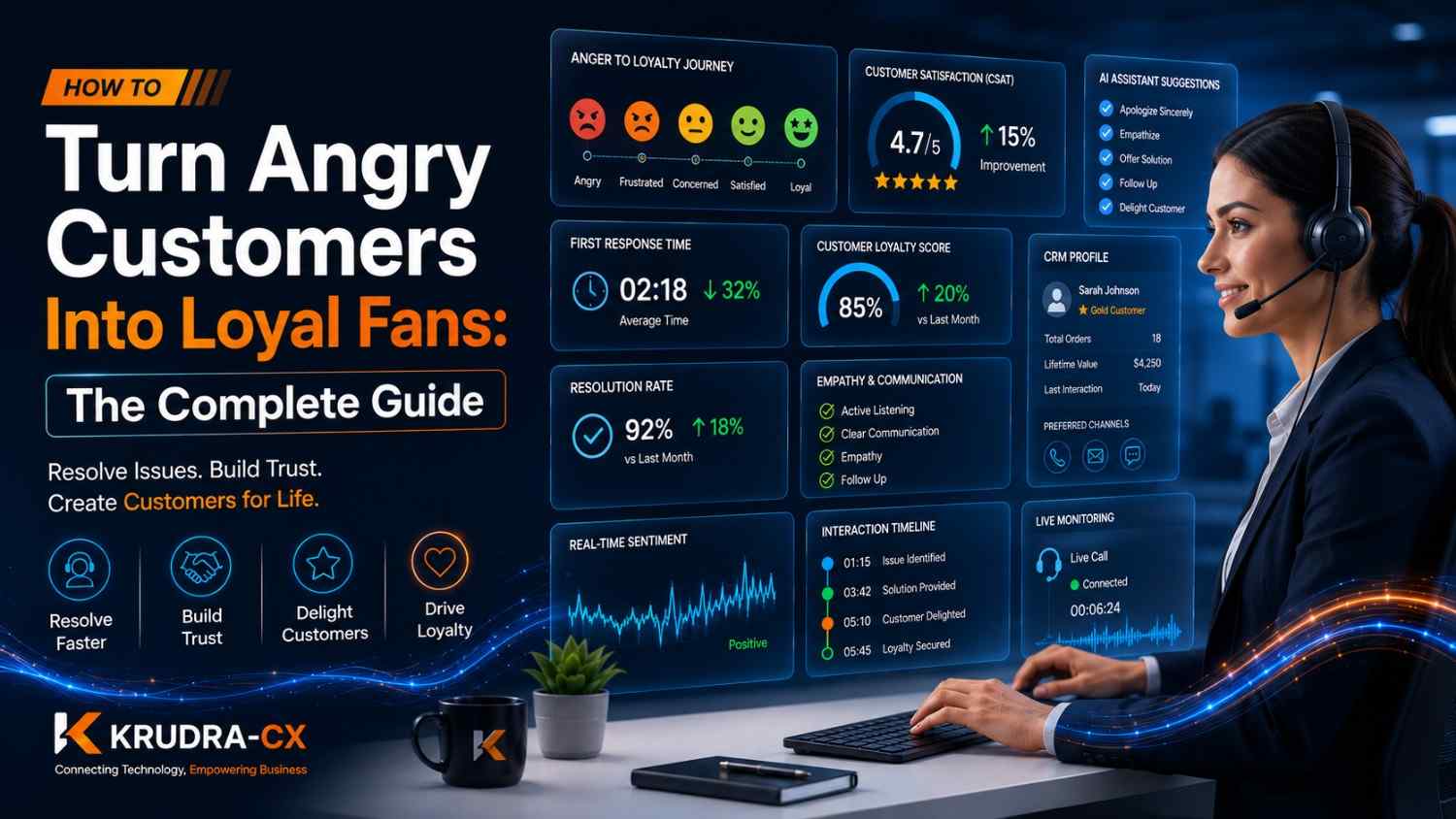
Recovery matters as much as the original experience. Here's something almost nobody talks about: customers who experience a problem that gets resolved quickly and empathetically are often MORE loyal than customers who never had a problem at all. This is called the Service Recovery Paradox. It means a complaint is actually an opportunity — if you handle it right. But most businesses handle it wrong, which makes everything worse.
The Financial Damage: Breaking Down the Real Numbers
Let's talk about money. Specifically, how much poor customer service is actually costing you in cold, hard revenue.
Customer Acquisition Cost vs. Retention Cost. It costs five to seven times more to acquire a new customer than to retain an existing one. This is not an estimate. It's been validated by research across dozens of industries. Every time you lose a customer due to poor service, you're not just losing their revenue — you're committing to spending five to seven times that amount to find and convert a replacement. That's not growth. That's a treadmill.
Lifetime Value Erosion. Every customer has a lifetime value — the total revenue they'll generate for your business if they stay. When someone churns early because of a bad experience, you don't just lose the last purchase. You lose every future purchase they would have made. For a customer with a three-year average lifetime who leaves after three months, you're losing approximately 93% of their lifetime value. Multiply that across every customer you lose to poor service and the number becomes staggering.
The Referral Multiplier in Reverse. Happy customers send you referrals. Unhappy ones don't. But it's worse than just the absence of referrals — unhappy customers actively redirect potential new customers away from you. If one unhappy customer tells ten people, and even three of those people choose a competitor instead of trying you, that's three acquired customers you'll now have to find and pay to acquire through advertising instead.
The Review Tax. Online reviews on Google, Trustpilot, Facebook, and industry-specific platforms now play a significant role in purchase decisions. Studies show that 93% of consumers read reviews before buying, and a one-star decrease in average rating can cause a 5-9% revenue decline. Accumulating negative reviews from poor service experiences is effectively a tax on your future conversion rate. Every new prospect who lands on your page sees that tax in the form of skepticism, reduced trust, and lower purchase probability.
Team and Operations Cost. Poor service creates internal damage too. Teams that are constantly firefighting complaints, dealing with refund requests, and managing angry customers become demoralized. High-stress, reactive service environments have higher staff turnover. And staff turnover costs money — typically 50-200% of an employee's annual salary when you factor in recruiting, onboarding, and lost productivity. Poor customer service cultures don't just lose customers. They lose good employees too.
The Industries Most at Risk
While poor customer service affects every business, certain industries are particularly vulnerable to its compounding effects.
E-commerce and retail face the highest churn risk because switching costs are almost zero. A customer can find an alternative in thirty seconds. Response time and return experience are the primary loyalty drivers — and the easiest to get wrong.
Service businesses — agencies, consultants, freelancers, coaches — depend almost entirely on trust and relationship. Poor communication, missed deadlines, or unclear deliverables don't just cost you the client. In a relationship-driven industry, your reputation travels ahead of you.
SaaS and subscription businesses feel poor service in their monthly recurring revenue. Churn is the enemy of SaaS growth, and poor onboarding or slow support is the number one cause of early churn. Losing a subscriber in month two versus month twenty-four is a massive revenue difference.
Hospitality and food service deal with the most immediate and public consequences. A bad experience in a restaurant or hotel is shared on Instagram before the customer even leaves the premises. The speed and visibility of feedback in hospitality makes service quality an existential issue, not just a preference.
The Compound Effect: How Poor Service Snowballs
One of the most underappreciated aspects of poor customer service is how it compounds over time.
It starts small. A customer has a mediocre experience. They don't complain. They just buy less frequently. Your revenue dips slightly, but it's within normal variation so you don't notice. A few months later, three more customers have similar experiences. They all stop buying. Now your numbers are noticeably off, but you attribute it to the market, the season, the algorithm.
Meanwhile, those four customers have mentioned their experiences to a combined twenty-plus people. Some of those people were potential new customers who now have a preconceived negative impression of your brand before they've ever interacted with you. Your conversion rate on new prospects quietly drops, though you can't trace it back to those conversations.
You respond by spending more on advertising to compensate for the revenue dip. Your customer acquisition cost goes up. Your margins compress. You're now working harder for less return.
Your team, sensing the pressure, becomes more reactive and stressed. Their service quality drops further. The cycle accelerates.
This is not a hypothetical. This is the lifecycle of most businesses that eventually plateau or fail. Not because they had a bad product. Not because the market disappeared. But because a slow, invisible erosion of customer experience quietly ate the foundation of the business from underneath.
What Exceptional Service Actually Looks Like
Here's the good news. The standard for "exceptional" customer service is actually not that high — because so many businesses do it so poorly. You don't need to be perfect. You need to be reliably, genuinely good.
Speed is the first signal of respect. Responding to a customer inquiry within the same hour communicates that they matter. Within the same day is acceptable. Beyond that, you're already starting from a deficit. Set response time targets and treat them as non-negotiable.
Personalization is not a luxury. Use the customer's name. Reference their purchase history. Know their context before they have to explain it. This is not difficult with modern CRM tools — it just requires intentionality. When a customer feels remembered, they feel valued. And valued customers stay.
Empathy before solutions. When something goes wrong, the first instinct of most service teams is to solve the problem immediately. But customers don't want a solution first. They want to feel heard first. A simple "I completely understand how frustrating that must be, and I want to make it right" before diving into the fix makes an enormous difference in how the interaction is received.
Follow-up without prompting. After resolving an issue or completing a delivery, follow up unprompted to ask how things are going. This takes thirty seconds and communicates that your relationship with the customer doesn't end when the transaction does. It's one of the highest ROI actions a service business can take.
Empower your team. Service quality can't just depend on escalations. Your frontline team needs the authority and the training to resolve issues, issue refunds, extend deadlines, or make exceptions without having to ask a manager. Bureaucratic service processes frustrate customers and demoralize staff.
Measure what matters. Track your Net Promoter Score, your Customer Satisfaction Score, your average response time, and your resolution time. What gets measured gets managed. If you're not measuring these numbers, you have no idea where your service experience is actually breaking down.
The 5-Step Framework to Turn Service Into a Growth Engine
If you've been reading this and recognizing your own business in some of these descriptions, here's a practical framework to start reversing the damage.
Step 1: Map the full customer journey. Document every single touchpoint a customer has with your business, from first awareness through post-purchase and beyond. For each touchpoint, ask honestly: what is the experience like right now? Where is there friction, confusion, or delay? You cannot fix what you haven't mapped.
Step 2: Establish your response time standard and commit to it. Decide what your response time commitment is across every channel — email, DM, phone, chat — and make it a non-negotiable operational standard. Then build the systems and schedules to support it. Nothing improves customer experience faster than consistent, predictable response times.
Step 3: Train for emotional intelligence, not just process. Your team needs to know how to handle a frustrated customer, how to de-escalate a tense conversation, how to deliver bad news with empathy, and how to turn a complaint into a loyalty moment. This is trainable. It doesn't require hiring different people — it requires investing in the ones you have.
Step 4: Build a feedback collection system. Within 24 hours of every service interaction, delivery, or project completion, ask for feedback. Keep it short — one or two questions maximum. Make it easy to respond. Analyze the responses and actually act on what you learn. Customers who see their feedback result in real changes become extremely loyal.
Step 5: Create a recovery protocol. When something goes wrong — and it will — have a clear, fast, empowered recovery process. Who gets notified? What's the resolution timeline? What compensation or goodwill gesture is appropriate? Having this decided in advance means you respond quickly and consistently, which is exactly what turns a potential defection into a loyalty moment.
The ROI of Investing in Service Excellence
Let's flip the script and talk about what happens when you get this right.
When customers have consistently excellent experiences, retention rates climb. Even a 5% increase in customer retention can increase profits by 25-95% — because retained customers buy more frequently, upgrade more readily, and cost significantly less to maintain than newly acquired customers.
Word of mouth becomes your primary acquisition channel. Instead of paying for ads to find new customers, your existing customers send new ones to you. Each referral arrives pre-sold, pre-trusting, and with a dramatically higher lifetime value than an ad-acquired customer.
Your conversion rate on new prospects improves because your review profile is strong, your reputation precedes you positively, and your brand feels trustworthy to someone who has never interacted with you.
Your team becomes more engaged. When service processes are clear, empowering, and effective, frontline employees feel capable and proud of their work instead of reactive and burned out. Staff retention improves. Training costs drop. Institutional knowledge accumulates.
And perhaps most importantly, your business becomes defensible. A great product can be copied. A great price can be undercut. But a truly exceptional customer experience — one built into your culture, your systems, and your people — is extremely difficult for competitors to replicate.
Conclusion: The Choice In Front of You
The cost of poor customer service is not a line item in your budget. It doesn't show up in a single report. It accumulates invisibly across lost revenue, missed referrals, damaged reputation, higher acquisition costs, and eroding team morale — until one day the numbers don't add up and nobody can figure out why.
But you're reading this. Which means you're asking the right questions.
The businesses that win long-term are not necessarily the ones with the best product or the biggest budget. They are the ones who have decided — deliberately, culturally, operationally — that every customer interaction is an opportunity to build something real. Trust. Loyalty. Advocacy.
That decision is available to you right now.
Ready to Transform Your Customer Experience?
At Krudracx, we help businesses identify where service is breaking down, build systems that create consistently excellent experiences, and turn customer retention into a growth engine rather than an afterthought.
If your business is experiencing higher churn than it should, if your reviews are inconsistent, if your team is constantly in reactive mode — we can help you diagnose the problem and build the fix.
Don't wait until the cost becomes obvious. By then, it's already compounding.
👉 Visit krudracx.com and let's talk about what exceptional service can do for your business.
Follow @krudracx on Instagram for daily insights on business growth, customer experience, and building brands that people actually stay loyal to.