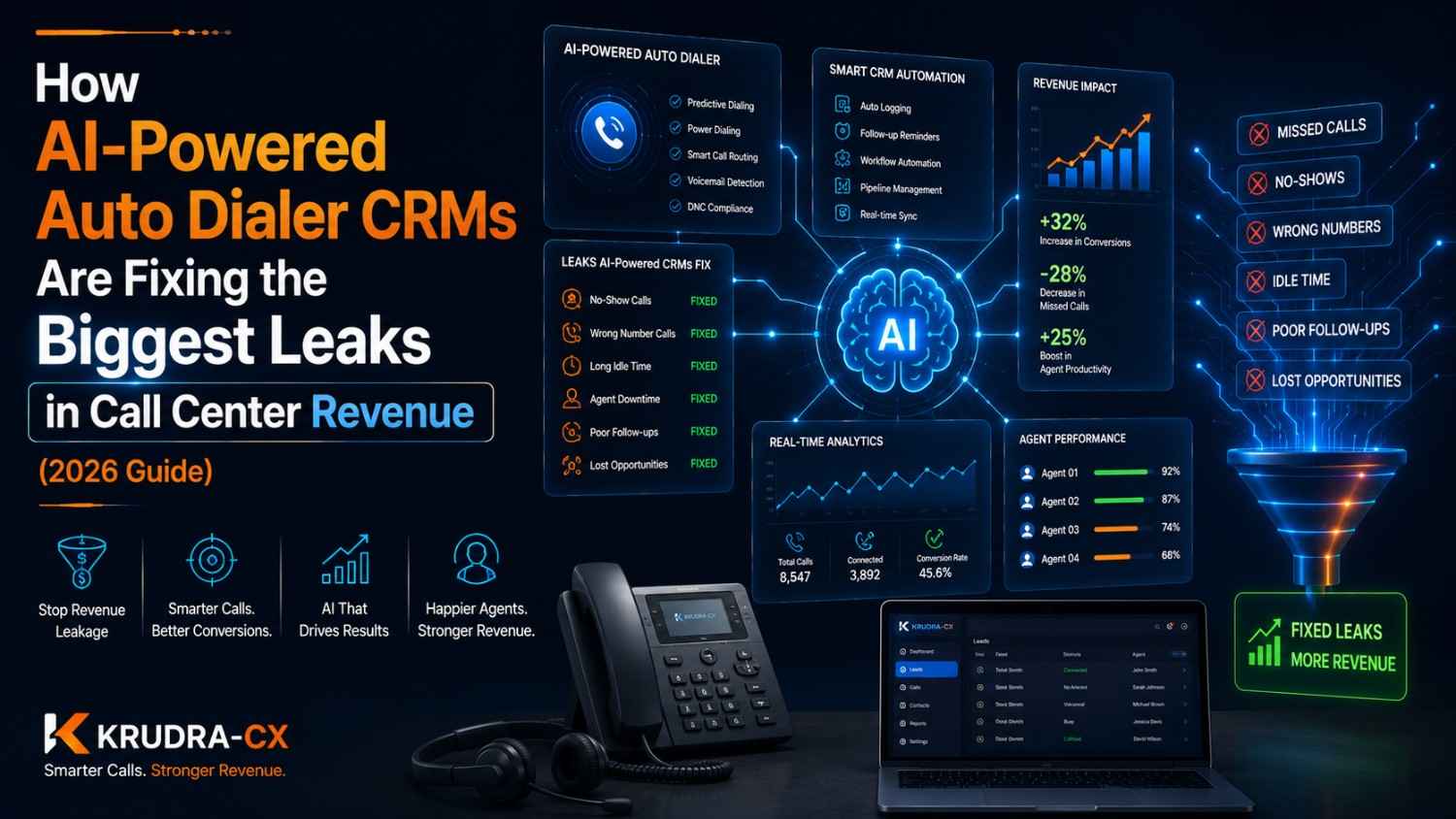
If your call center is still running on manual dialing and spreadsheets, you're not just behind — you're leaking revenue every single day, and probably don't even know how much.
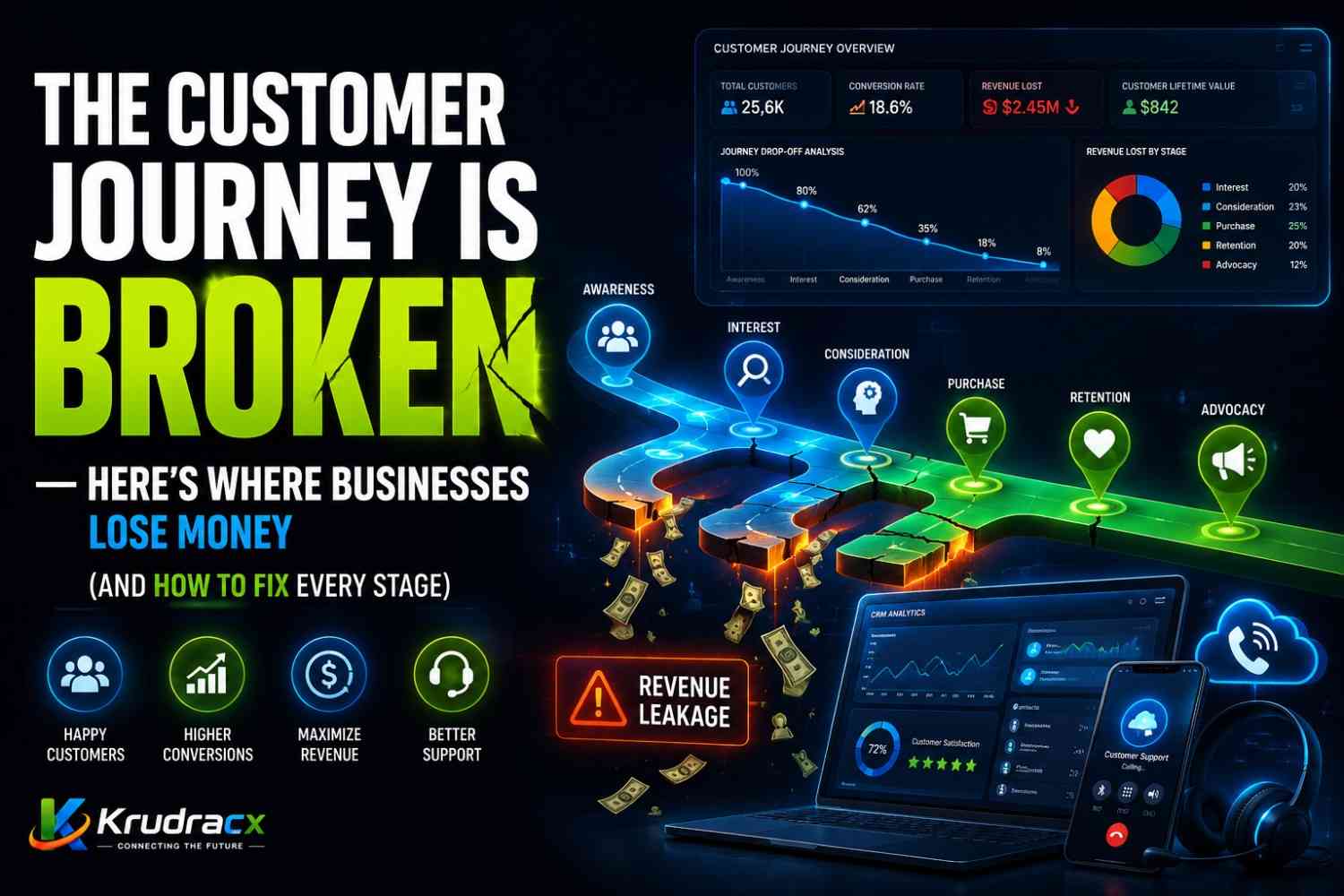
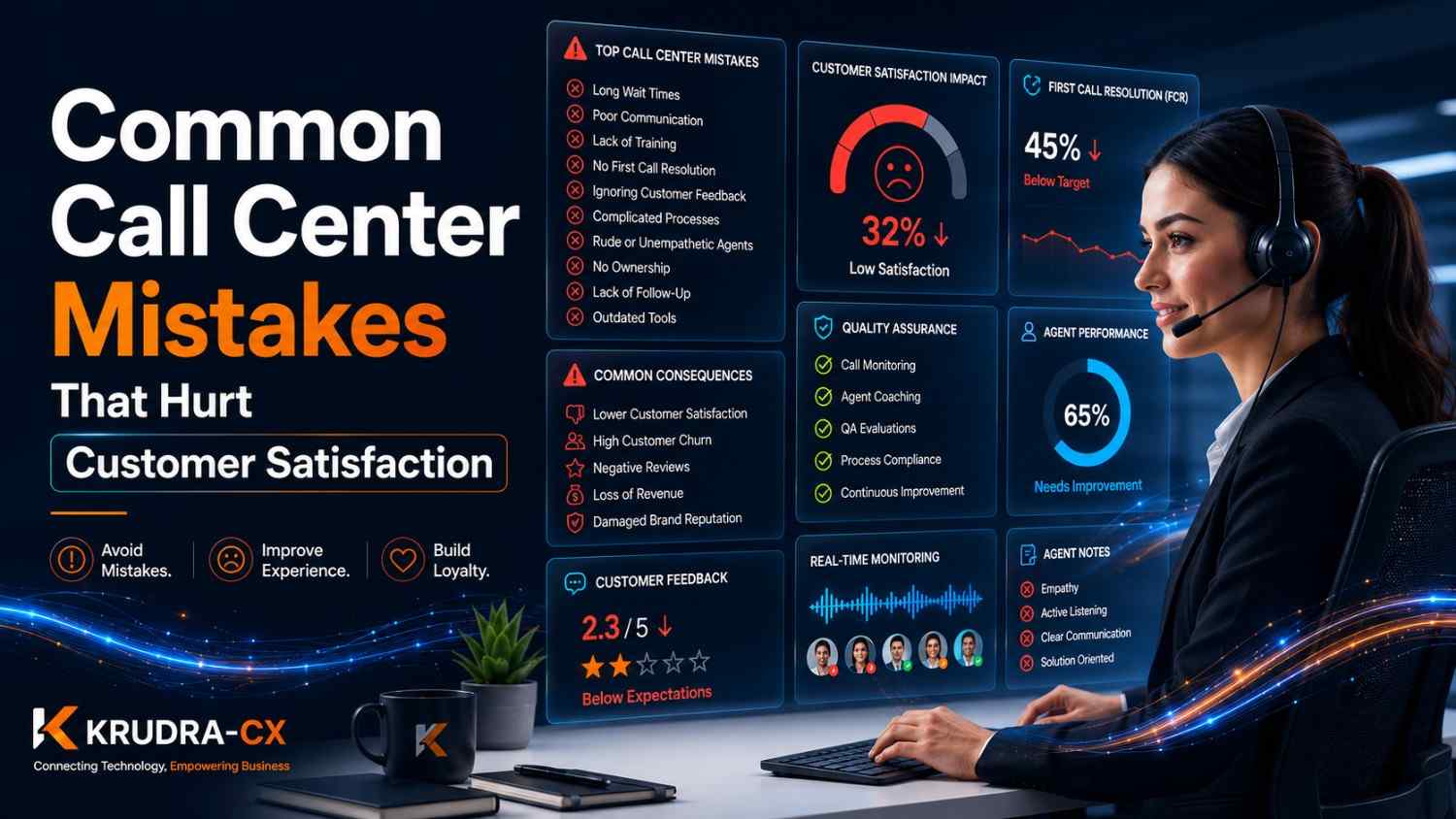
Here's the uncomfortable truth: most call centers don't lose deals because their agents aren't good enough. They lose deals because the system around the agents is broken. Leads sit untouched for hours. Agents waste half their shift dialing numbers that don't pick up. Follow-ups fall through the cracks because nobody's tracking who said what, when.
In 2026, none of that is a "cost of doing business" anymore. It's a fixable problem — and AI-powered auto dialer CRMs are the fix.
This guide breaks down exactly where call centers are bleeding money, how AI and auto dialer CRM integration close those gaps, and what to actually look for before you make the switch.
The Real Cost of a "Normal" Call Center Day
Picture a typical outbound sales floor. Twenty agents, a spreadsheet of leads, and manual dialing.
Here's what's actually happening behind the scenes:
- Agents spend 40–60% of their time manually dialing numbers, waiting for rings, and hitting voicemails or dead lines.
- Fresh leads — the ones with the highest chance of converting — often sit untouched for hours because there's no system prioritizing who gets called first.
- Follow-ups get missed entirely because there's no automated trail connecting the first call to the second, third, or fourth touchpoint.
- Managers have no real visibility into why conversion rates are low — is it the script, the timing, the lead quality, or just agents burning out on repetitive dialing?
None of these are agent problems. They're infrastructure problems. And infrastructure problems compound — a lead that isn't called within 5 minutes of coming in has a dramatically lower chance of converting than one called immediately. Multiply that by hundreds of leads a day, and you're not looking at a small leak. You're looking at a burst pipe.
Where the Leaks Actually Happen
Before talking about solutions, it helps to name the leaks precisely. There are four recurring ones across almost every traditional call center setup.
1. Idle Time Between Calls
Manual dialing means agents are doing clerical work — looking up numbers, dialing, waiting — instead of actually talking to prospects. That "waiting" time doesn't show up on any dashboard, but it's the single biggest hidden cost in most call centers.
2. Lead Decay
Leads go cold fast. A lead that isn't contacted within the first few minutes is already losing value. Without a system that instantly routes and prioritizes leads, your best opportunities are decaying in a queue while agents work through older, colder ones first.
3. Inconsistent Follow-Up
Sales is rarely a one-call close. It takes sequences — call, SMS, call again, voice blast, call again. Without automation stitching this together, follow-up depends entirely on individual agent memory and discipline. That's not a system. That's hoping.
4. Zero Feedback Loop
Traditional setups don't tell you why something isn't working. Was the pickup rate low because of bad numbers, bad timing, or bad targeting? Without call data feeding back into the system, every week is a guessing game repeated from scratch.
What "AI-Powered Auto Dialer CRM" Actually Means
The term gets thrown around loosely, so it's worth being precise. A modern AI-powered auto dialer CRM typically combines three layers working together:
1. Auto/Predictive Dialer Engine
Instead of an agent manually dialing each number, the system dials automatically — either sequentially (auto dialer) or using predictive algorithms that dial multiple numbers ahead of time, calculating agent availability so a live prospect is connected the moment an agent is free (predictive dialer).
2. AI Layer
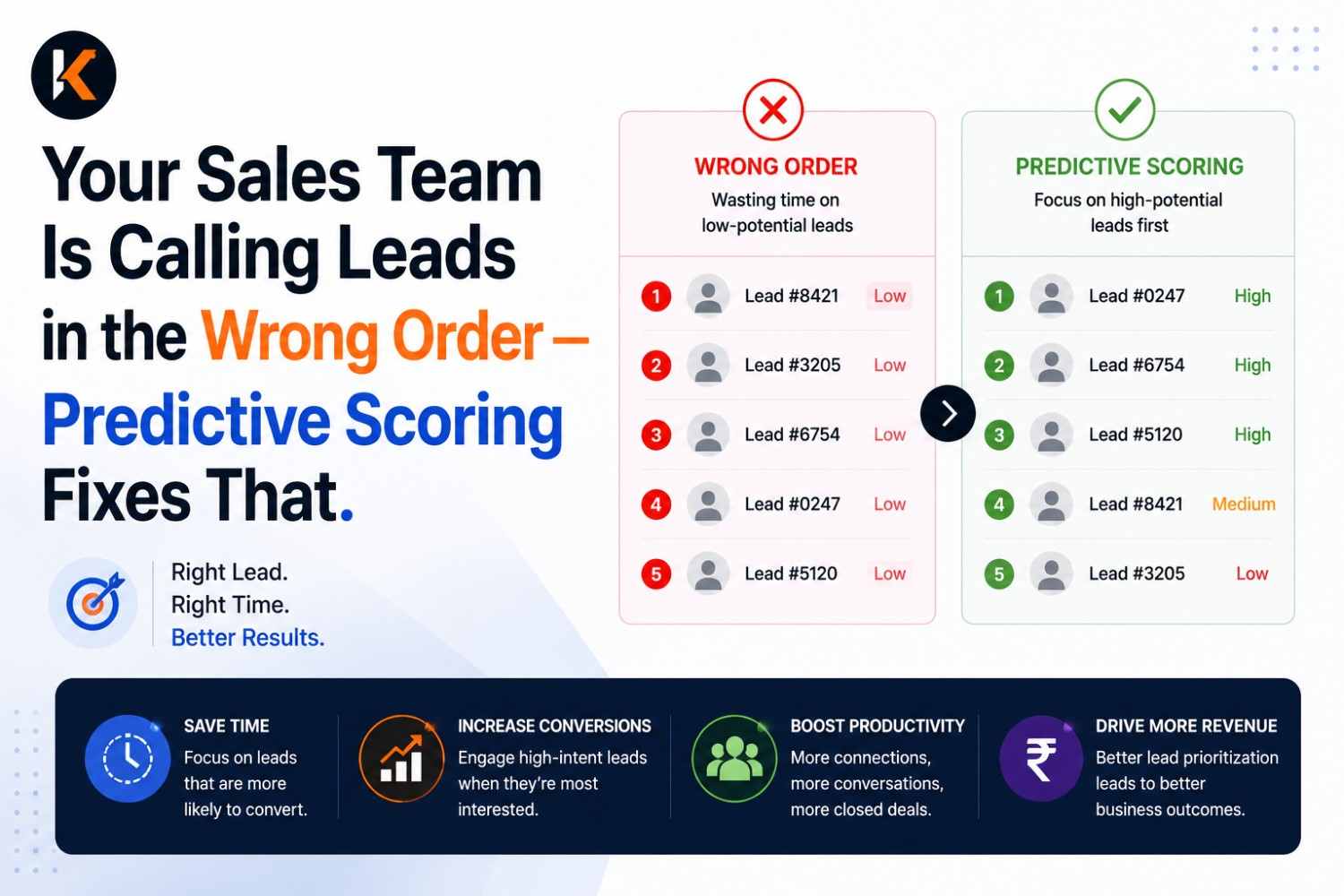
This is where things shift from "automation" to "intelligence." AI can score leads by likelihood to convert, suggest the best time to call a specific number based on historical pickup patterns, transcribe and analyze calls in real time, and flag at-risk conversations before they're lost.
3. CRM Integration
Every call, outcome, and note flows directly into a unified record — no manual data entry, no lost context. The next agent who picks up that lead sees the full history instantly.
When these three layers are stitched together properly, the system isn't just dialing faster. It's making smarter decisions about who to call, when, and how — decisions that used to rely entirely on agent instinct.
How This Actually Plugs the Leaks
Let's go back to the four leaks and see what changes.
Idle time between calls → An auto dialer removes manual dialing entirely. Agents go from call to call with almost zero downtime. Predictive dialing takes it further by ensuring a live, connected call is waiting the moment an agent finishes their previous one.
Lead decay → AI-based lead scoring and instant routing mean fresh leads get called within minutes, not hours. The system doesn't wait for a human to notice a new lead came in — it acts immediately.
Inconsistent follow-up → Automated sequences (call → SMS → voice blast → call again) run in the background without depending on any single agent remembering to do it. Nothing falls through the cracks because nothing depends on memory.
Zero feedback loop → Every call is logged, transcribed, and analyzed. Managers can finally see patterns — which scripts convert, which time slots have the best pickup rates, which agents need coaching — instead of guessing.
The net effect isn't just "more calls made." It's more of the right calls, made at the right time, followed up in the right sequence — which is where the actual revenue difference shows up.
Predictive Dialer vs. Manual Calling: The Real Comparison
This comparison comes up constantly, so it's worth laying out plainly.
Manual Calling:
- Agent dials every number by hand
- High idle time between calls
- No intelligent prioritization of leads
- Follow-up depends entirely on individual discipline
- Reporting is manual and after-the-fact
Predictive Dialer (AI-enhanced):
- System dials automatically, calculates agent availability
- Idle time reduced dramatically — often by more than half
- Leads prioritized by AI scoring, not gut feeling
- Follow-up sequences run automatically
- Real-time reporting and call analytics built in
The gap isn't incremental. It's structural. Manual calling scales linearly — more calls need more agents, more hours, more cost. A predictive dialer setup scales the output of each agent, which is a fundamentally different growth curve.
Voice Blaster: The Underrated Piece of the Puzzle
While auto dialers and predictive dialers get most of the attention, bulk voice calling — often called a "voice blaster" — solves a different problem: reach at scale.
Not every outreach needs a live agent. Payment reminders, appointment confirmations, promotional announcements, and initial outreach to a large list can all be handled through automated voice blasts, freeing agents to focus only on conversations that genuinely need a human.
Used well, a voice blaster isn't a replacement for agent-led calling — it's a filter. It handles the broad, low-complexity reach, so the dialer and agents can focus entirely on high-intent leads.
What to Actually Look for Before Switching Systems
If you're evaluating a call center solution, here's what separates a real AI-powered auto dialer CRM from a repackaged basic dialer with an "AI" label slapped on it:
1. Real lead scoring, not just lead sorting.
Ask specifically how leads are prioritized. If the answer is "by upload order" or "alphabetically," that's not AI — that's a spreadsheet with extra steps.
2. Native CRM integration, not a bolt-on.
If call data doesn't automatically sync into a unified customer record, your agents are still doing manual data entry — one of the exact inefficiencies you're trying to eliminate.
3. Real-time analytics, not next-day reports.
Managers need to see what's happening on the floor as it happens, not in a report generated 24 hours later when the pattern has already cost you leads.
4. Compliance and call quality controls.
Predictive dialers, if poorly configured, can create dropped calls and compliance risk. A serious provider will have safeguards built in — not as an afterthought.
5. Scalability without re-platforming.
Whatever you choose should handle your call volume today and 3x that volume next year without needing a full system overhaul.
The Bigger Shift: From Reactive to Predictive Operations
The deeper change happening in call centers right now isn't really about dialing speed. It's about the shift from reactive operations (agents responding to whatever's in front of them) to predictive operations (the system telling agents exactly who to call, when, and with what context).
That shift changes what "a good call center" even means. It used to mean well-trained agents working hard. Now it means well-trained agents working inside a system that's constantly feeding them the highest-value action at every moment — powered by data most human managers could never track manually in real time.
Call centers that make this shift aren't just running more efficiently. They're converting leads that used to slip away simply because nobody called them in time.
Every missed call, every cold lead, every follow-up that never happened — those aren't small inefficiencies. Added up across a month, they're often the difference between hitting targets and missing them.
AI-powered auto dialer CRMs don't just make call centers faster. They make them smarter about where effort goes — which is the actual lever behind higher conversion rates, lower agent burnout, and a system that scales without falling apart.
The call centers that adopt this now aren't just ahead. They're the ones no longer leaking revenue they didn't even know they were losing.