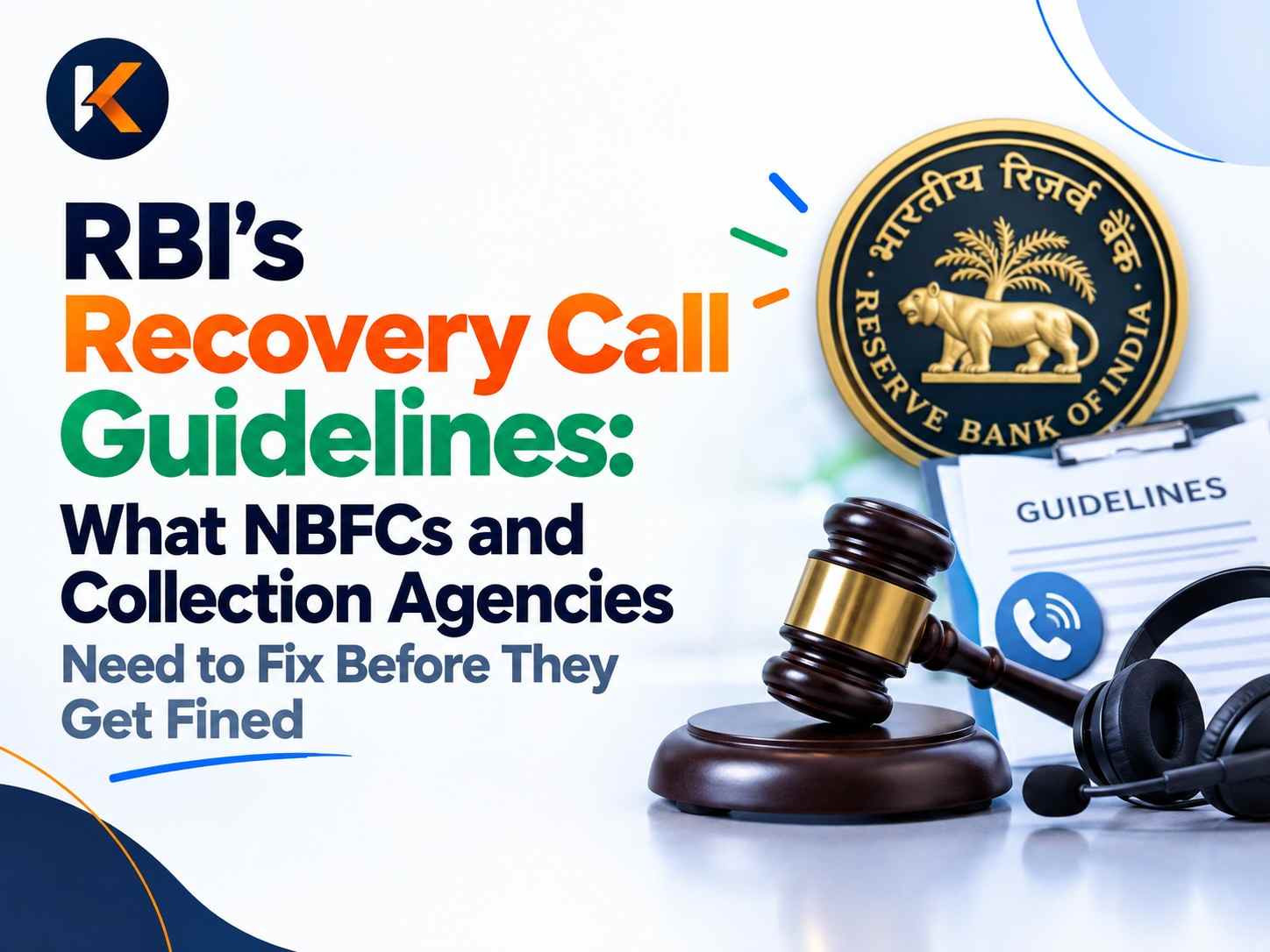
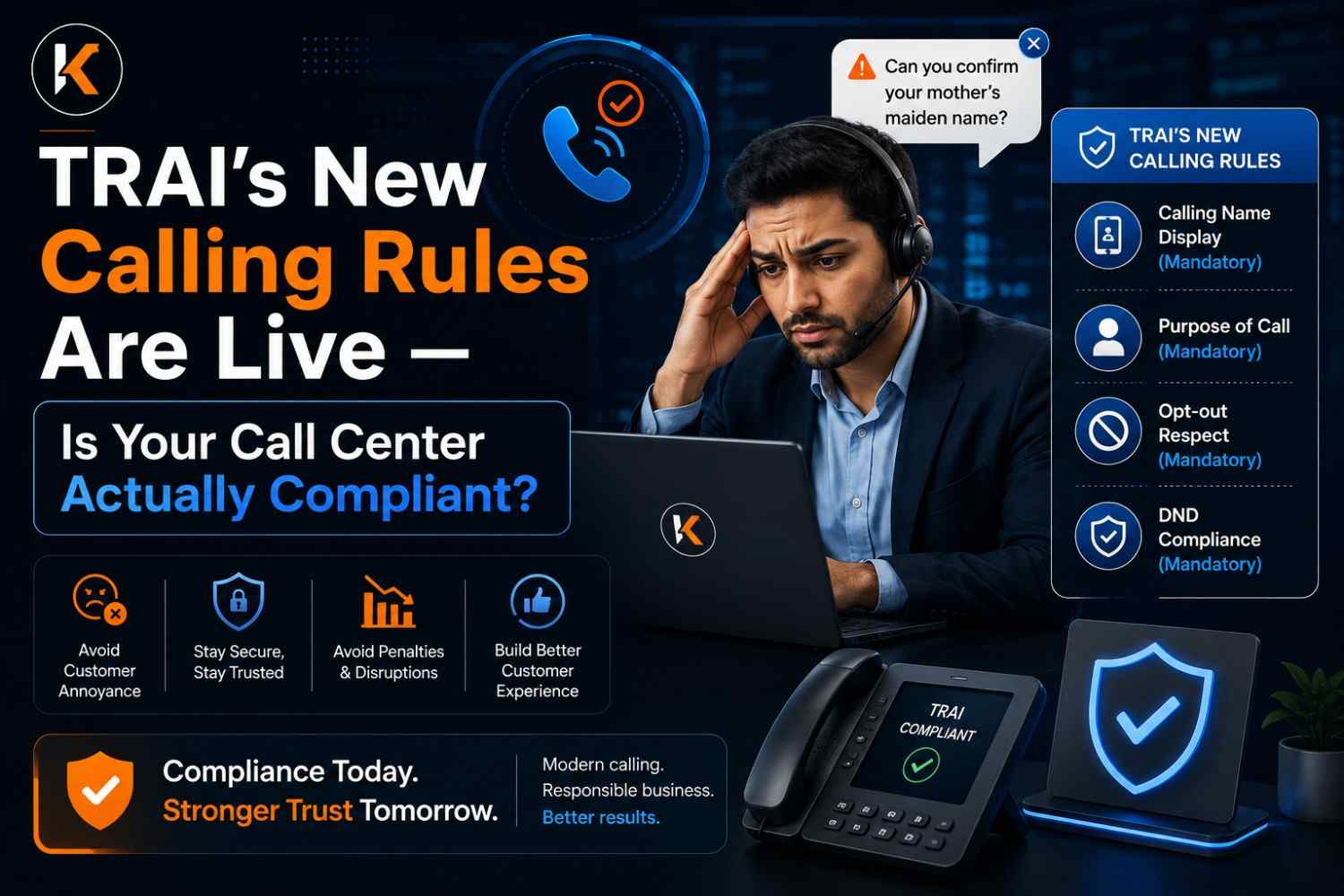
A predictive dialer fires off 200 calls an hour. If even a fraction of those numbers aren't registered correctly under TRAI's traceability and DLT framework, the outcome isn't a warning — it's blocked call paths, flagged numbers, and campaigns quietly losing connect rate without anyone on the floor knowing why.
This is happening to call centers right now, not as a future risk. TRAI has been steadily tightening enforcement around unsolicited commercial communication, sender ID traceability, and DLT (Distributed Ledger Technology) registration — and a large share of outbound operations are running on setups built before these rules existed.
What actually changed
Three areas matter most for outbound-heavy operations:
Traceability enforcement — every call and message needs to be traceable back to a registered, verified sender. Numbers that don't match a registered entity are increasingly getting blocked at the carrier level, not just flagged after the fact.
DLT registration gaps — templates, sender IDs, and content need to be pre-registered on the DLT platform. A mismatch between what's registered and what's actually being dialed or messaged is one of the most common — and most avoidable — reasons connect rates quietly drop.
DND and consent handling — customers registered on DND lists who haven't given explicit consent for a specific category of call are protected more strictly than most outbound teams assume. "They're an existing customer" isn't automatically a compliant justification anymore.
Why this is the trending issue right now
Enforcement has moved from advisory to active in 2026 — carriers are blocking non-compliant traffic proactively instead of waiting for complaints to pile up. For a sales or collections team running high call volumes, that means connect rate drops can now be a compliance symptom, not a dialer performance problem — and most teams are debugging the wrong system when it happens.
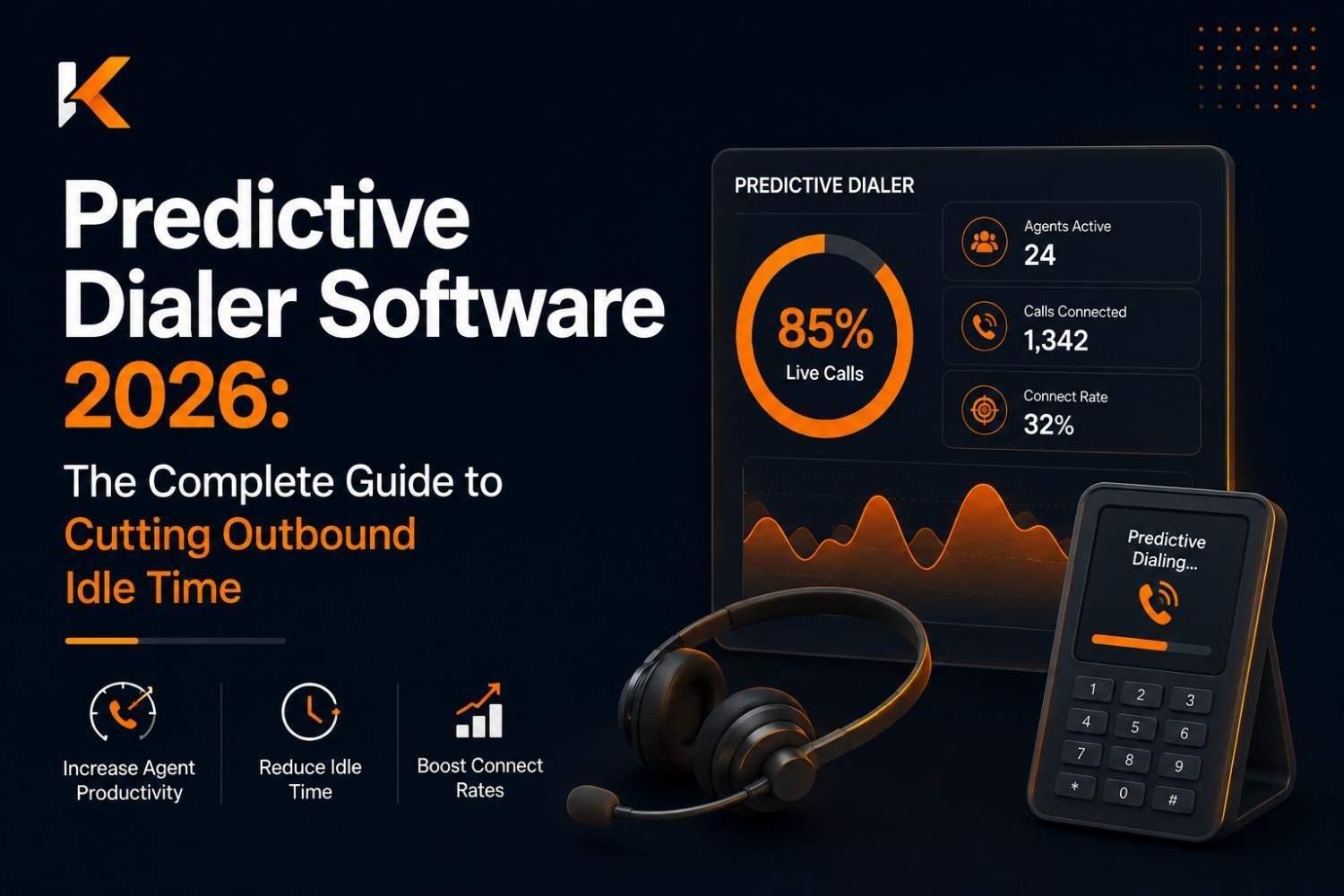
This connects directly to what your recent AI dialing post already covers: connect rate optimization only works if the calls are reaching people at all. A perfectly tuned predictive dialer pointed at a non-compliant number pool is optimizing a broken pipe.
What an actual compliance audit looks like
Sender ID match check — confirm every number and sender ID your dialer uses is registered to your actual entity on the DLT platform, not a legacy registration from a previous campaign.
Consent trail — for every outbound category (sales, collections, support), there needs to be a documented consent basis, not an assumption based on prior relationship.
DND list sync frequency — DND registries update regularly; a dialer syncing against a stale list is calling numbers it shouldn't, even with good intentions.
Template pre-approval — any SMS or WhatsApp template tied to a call flow needs prior DLT approval; using an unapproved template is one of the fastest ways to get an entire sender ID blocked.
The real cost of ignoring this
It's not a fine that shows up in a headline. It's a sender ID getting silently deprioritized or blocked by carriers, connect rates dropping over weeks, and a sales or collections team assuming their dialer or their agents got worse — when the actual cause is sitting in the compliance layer nobody's been auditing.
Ready to check where your compliance gaps actually are?
KRUDRA-CX builds TRAI-aware calling infrastructure for Indian BFSI, enterprise, and lead-gen teams — so your connect rates reflect your outreach, not your compliance gaps.
Book Free Demo → krudracx.com/book-for-demo
Talk to Sales → krudracx.com/contact