The Complete 2026 Guide to Interactive Voice Response for Indian Businesses:-
If you've ever called a bank, an e-commerce company, or a customer support line and heard "Press 1 for Hindi, Press 2 for English," you've already interacted with IVR. It's one of the most common — and most underrated — technologies in modern business communication. Yet many growing businesses still don't fully understand what IVR is, how it works, or why it matters for customer experience and operational efficiency.
In this guide, we'll break down everything you need to know about IVR: what it is, how it functions, the different types available, its benefits, common use cases, and how to choose the right IVR system for your business in 2026.
What Is IVR?
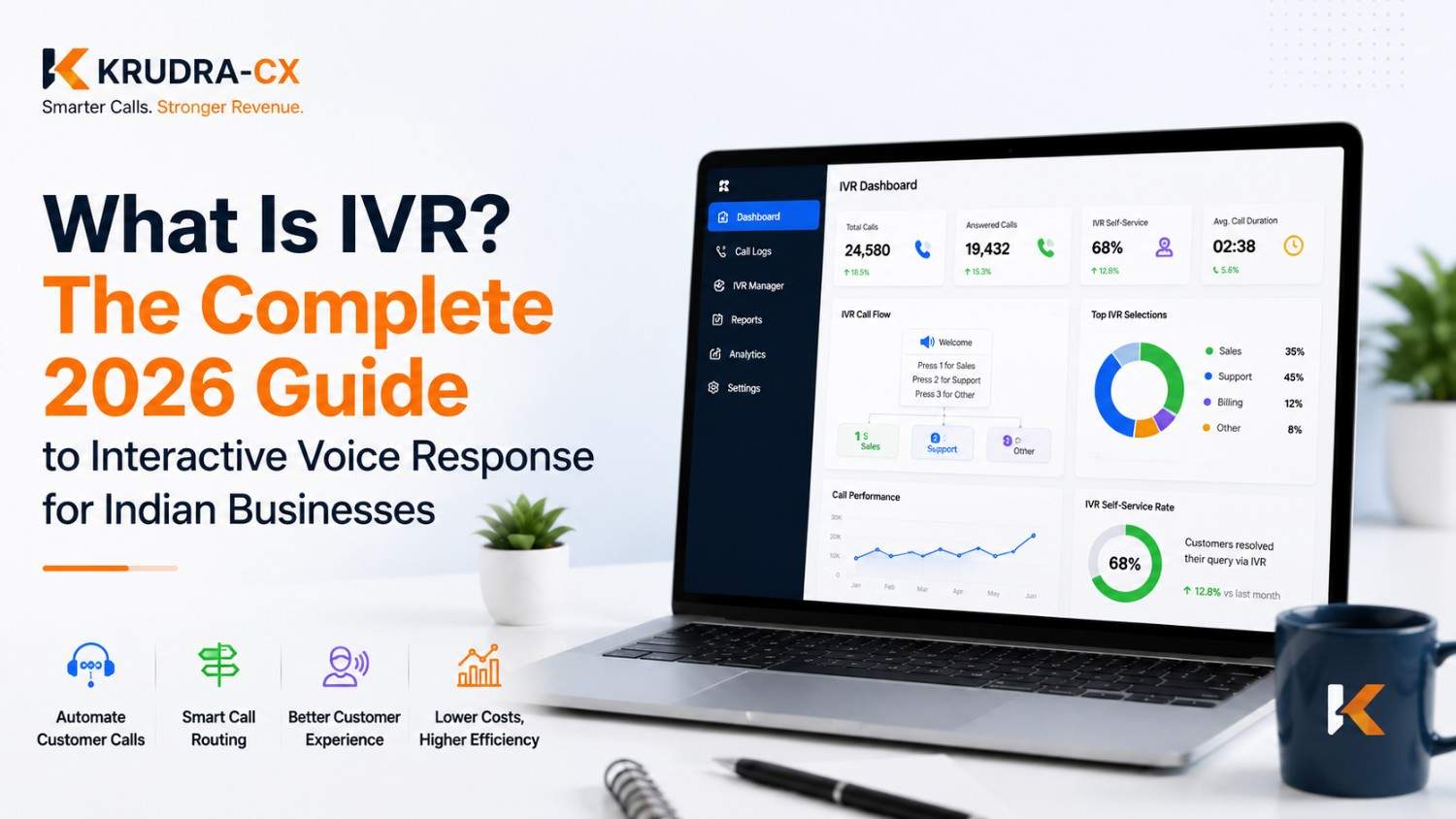
IVR stands for Interactive Voice Response. It is an automated telephony system that interacts with callers through pre-recorded voice prompts and menu options, allowing them to navigate a business's phone system using their voice or keypad inputs — without needing to speak to a human agent immediately.
In simple terms, IVR is the "digital receptionist" of a business phone line. When a customer calls, instead of the call going directly to an agent, an automated voice greets them and offers a menu of options such as:
- Press 1 for Sales
- Press 2 for Support
- Press 3 for Billing
- Press 4 to speak with an agent
Based on the caller's input, the system either provides automated information (like account balance or order status) or routes the call to the right department or agent.
How Does IVR Work?
Understanding the mechanics of IVR helps clarify why it's so effective for businesses of every size. Here's a step-by-step breakdown of how a typical IVR system processes a call:
1. Call Initiation
A customer dials the business's phone number. The call is received by the IVR system before it reaches any human agent.
2. Greeting and Menu Prompt
The IVR plays a pre-recorded greeting, often followed by language selection and a menu of options relevant to the business (sales, support, billing, etc.).
3. Input Collection
The caller responds using their keypad (DTMF — Dual-Tone Multi-Frequency signaling) or, in advanced systems, using voice commands recognized through speech recognition technology.
4. Call Routing or Self-Service
Depending on the input, the system either:
- Routes the call to the appropriate department or the next available agent
- Provides automated information directly (like order tracking, account details, or FAQs)
- Places the caller in a queue with hold music and estimated wait time
5. Data Logging
Every interaction is logged in the backend system, often integrated with a CRM, so businesses can track call volume, common queries, and agent performance.
This entire process happens within seconds, creating a smooth, structured experience for the caller while reducing the workload on human agents.
Types of IVR Systems
Not all IVR systems are built the same. Depending on business needs, there are several types worth understanding:
1. Single-Level IVR
A basic system with one menu layer. Simple and quick, ideal for small businesses with limited call routing needs.
2. Multi-Level IVR
A more advanced system with nested menus (Press 1 for Sales → Press 1 for New Purchase, Press 2 for Existing Order). This suits businesses with multiple departments or complex service offerings.
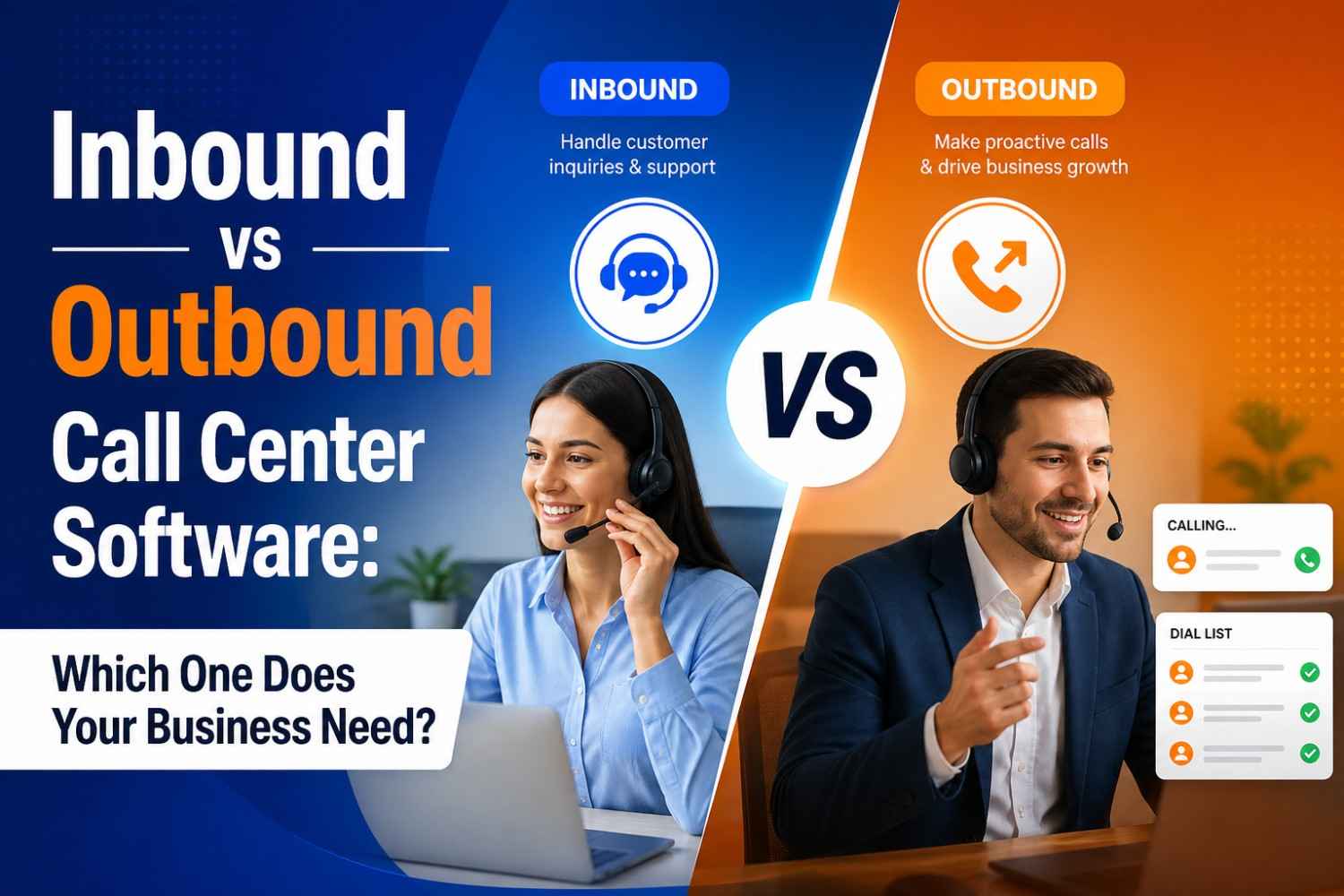
3. Inbound IVR
Handles incoming calls — greeting customers, routing them, and providing self-service information.
4. Outbound IVR
Used for automated outgoing calls such as appointment reminders, payment due notifications, or promotional announcements.
5. Speech-Enabled IVR
Instead of pressing keys, callers speak their responses, and the system uses speech recognition to understand and act on them. This is increasingly common with AI-powered voice systems in 2026.
6. Cloud-Based IVR
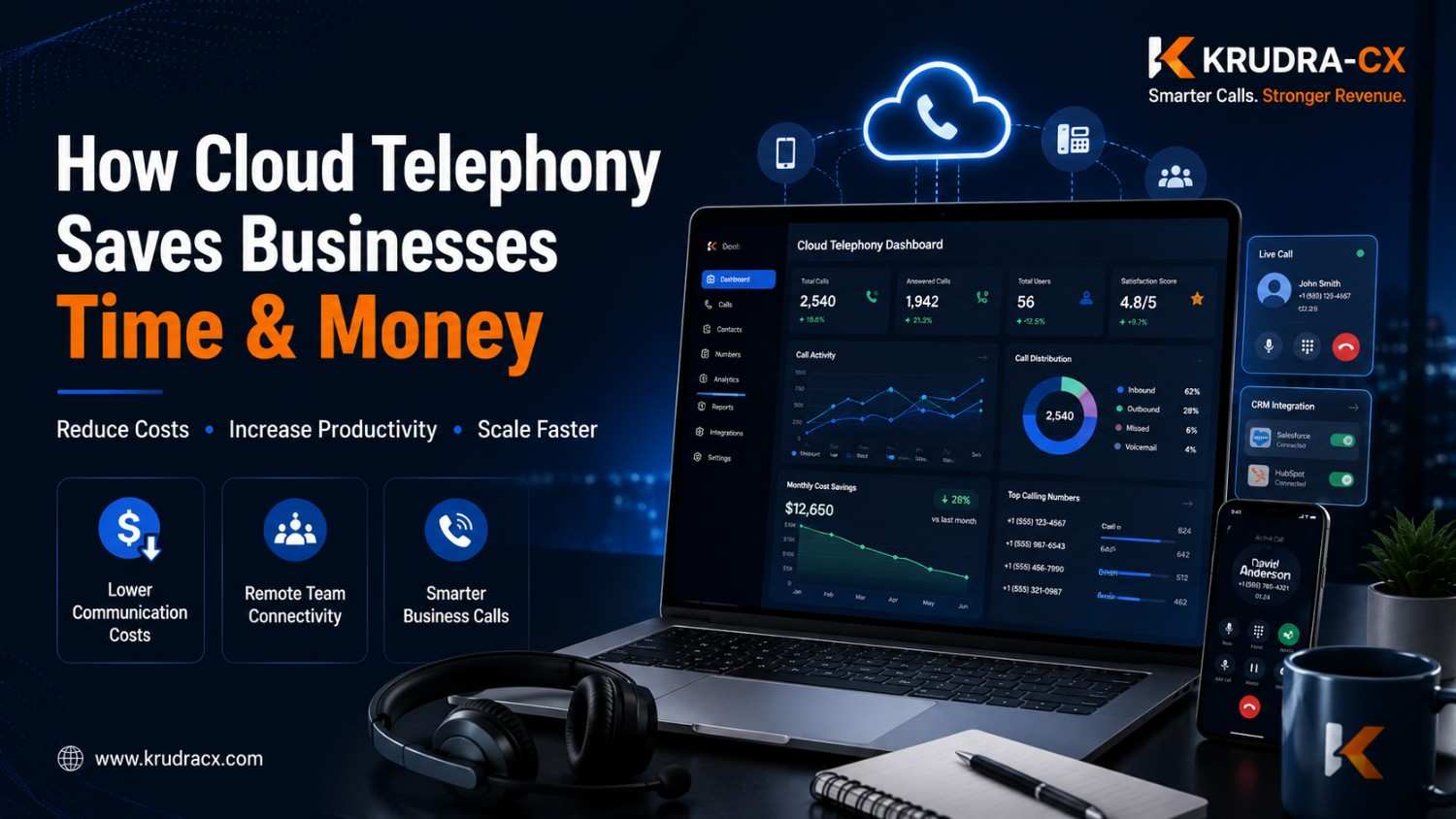
Hosted on cloud infrastructure rather than physical hardware, allowing businesses to scale quickly, reduce upfront costs, and manage the system remotely — the preferred choice for most modern call centers today.
Why Is IVR Important for Businesses?
IVR isn't just a "nice to have" feature anymore — it's become a core part of customer experience infrastructure. Here's why:
1. Improves Customer Experience
Customers don't like waiting on hold without direction. IVR gives them a clear path to get what they need, whether that's self-service information or being connected to the right department without unnecessary transfers.
2. Reduces Operational Costs
By automating routine queries (balance checks, order status, FAQs), IVR reduces the number of calls that require live agents, cutting staffing costs significantly.
3. 24x7 Availability
Unlike human agents, IVR systems can operate round the clock. Customers can get basic information or complete simple tasks even outside business hours.
4. Efficient Call Routing
IVR ensures customers reach the right department the first time, reducing call transfers and improving first-call resolution rates — a key metric for customer satisfaction.
5. Handles High Call Volumes
During peak hours or seasonal spikes, IVR can manage large volumes of simultaneous calls without customers experiencing long busy signals or dropped calls.
6. Enhances Brand Professionalism
A well-designed IVR system gives even small businesses a polished, professional image, similar to that of larger enterprises.
7. Valuable Data Collection
Every IVR interaction generates data — what customers are calling about most, peak call times, and common pain points — helping businesses make informed decisions.
Common Use Cases of IVR Across Industries
IVR isn't limited to any one sector. Here's how different industries use it:
Banking & Financial Services (BFSI)
Balance inquiries, transaction alerts, loan status updates, fraud alerts, and secure OTP verification — all handled through IVR without human intervention.
E-commerce
Order status updates, delivery tracking, return/refund requests, and customer support routing.
Healthcare
Appointment scheduling, prescription refill requests, and general clinic information.
Travel & Hospitality
Booking confirmations, flight status updates, and reservation changes.
Collections & BPOs
Automated payment reminders, outbound IVR campaigns for due payments, and call routing for recovery agents.
Real Estate
Lead qualification, property inquiry routing, and appointment scheduling with sales teams.
IVR vs. Live Agent: Do You Still Need Human Support?
A common misconception is that IVR replaces human agents entirely. In reality, the best customer experience comes from a hybrid approach — IVR handles repetitive, low-complexity queries, while human agents focus on complex issues that require empathy, judgment, or problem-solving.
Modern IVR systems are designed with a clear escape route — usually "Press 0 to speak with an agent" — ensuring customers are never trapped in an automated loop when they genuinely need human assistance. Poorly designed IVR systems that make it difficult to reach a live agent are one of the biggest sources of customer frustration, so this balance matters.
Key Features to Look for in an IVR System (2026)
If you're evaluating IVR software for your business, here are the features that matter most:
- Multi-language support — critical for businesses operating across diverse regions like India
- CRM integration — syncing caller data with customer records for personalized service
- Speech recognition — for a more natural, voice-first customer experience
- Call recording and analytics — for quality monitoring and compliance
- Customizable call flows — the ability to design and modify menus without heavy technical dependency
- Cloud-based deployment — for scalability and remote management
- Compliance readiness — especially important for regulated industries like BFSI, aligning with TRAI and data protection guidelines in India
- Outbound IVR campaigns — for reminders, alerts, and promotional use cases
IVR and Compliance in India
For Indian businesses, especially those in BFSI, healthcare, and collections, IVR systems must align with regulatory requirements such as TRAI guidelines and DND (Do Not Disturb) regulations. A good IVR platform will have built-in compliance features — like consent-based outbound calling, call recording for audit trails, and secure handling of sensitive customer data (like OTPs and account information).
Non-compliance isn't just a legal risk — it can also damage customer trust, so choosing an IVR provider that understands the Indian regulatory landscape is essential.
How to Choose the Right IVR System for Your Business
When selecting an IVR solution, consider the following:
- Business size and call volume — a startup's needs differ vastly from an enterprise BFSI call center's
- Integration requirements — does it connect with your existing CRM and telephony stack?
- Scalability — can it grow with your business without major re-investment?
- Ease of setup — cloud-based IVR systems typically go live faster than traditional hardware-based ones
- Support and reliability — 24x7 technical support and strong uptime guarantees matter, especially for customer-facing operations
- Cost structure — understand whether pricing is per-agent, per-call, or subscription-based
Final Thoughts
IVR has evolved from a simple call-routing tool into a strategic asset for customer experience and operational efficiency. Whether you're a bank handling millions of customer interactions, an e-commerce brand managing order queries, or a growing BPO scaling outbound campaigns, a well-designed IVR system can significantly reduce costs, improve response times, and enhance customer satisfaction.
As businesses move further into automation and AI-driven communication in 2026, IVR remains a foundational layer — one that, when combined with smart call routing, CRM integration, and compliance-ready infrastructure, can transform how a business connects with its customers.
If you're evaluating IVR solutions for your call center or business phone system, it's worth choosing a provider with proven reliability, strong compliance support, and seamless integration capabilities — ensuring your customers get a smooth, professional experience every time they call.
Ready to Give Your Customers a Smarter Way to Connect:-
Stop losing calls to confusion and long hold times. KRUDRA-CX's cloud-based IVR sets up your call flows in hours — not weeks — with multi-language support, CRM integration, and full TRAI compliance built in. Trusted by SBI, HDFC, and Axis Bank.