Here is a situation that plays out more often than you would think.
A business owner decides they need call center software. They start researching options, get on a few demo calls, and within an hour they are completely overwhelmed — because every vendor is asking them the same question they cannot confidently answer.
"Are you looking for inbound or outbound ?"
It sounds like it should be obvious. But for many businesses, especially those whose teams handle both types of calls, the answer is genuinely not straightforward. And choosing the wrong type of software does not just mean missing a few features — it means building your entire calling operation on a foundation that does not match what your team actually does.
So in this guide, we are going to settle this completely. What inbound call center software is, what outbound call center software is, how they differ in ways that actually matter, what happens when you need both, and exactly how to decide which one your business needs right now.
What Is Inbound Call Center Software?
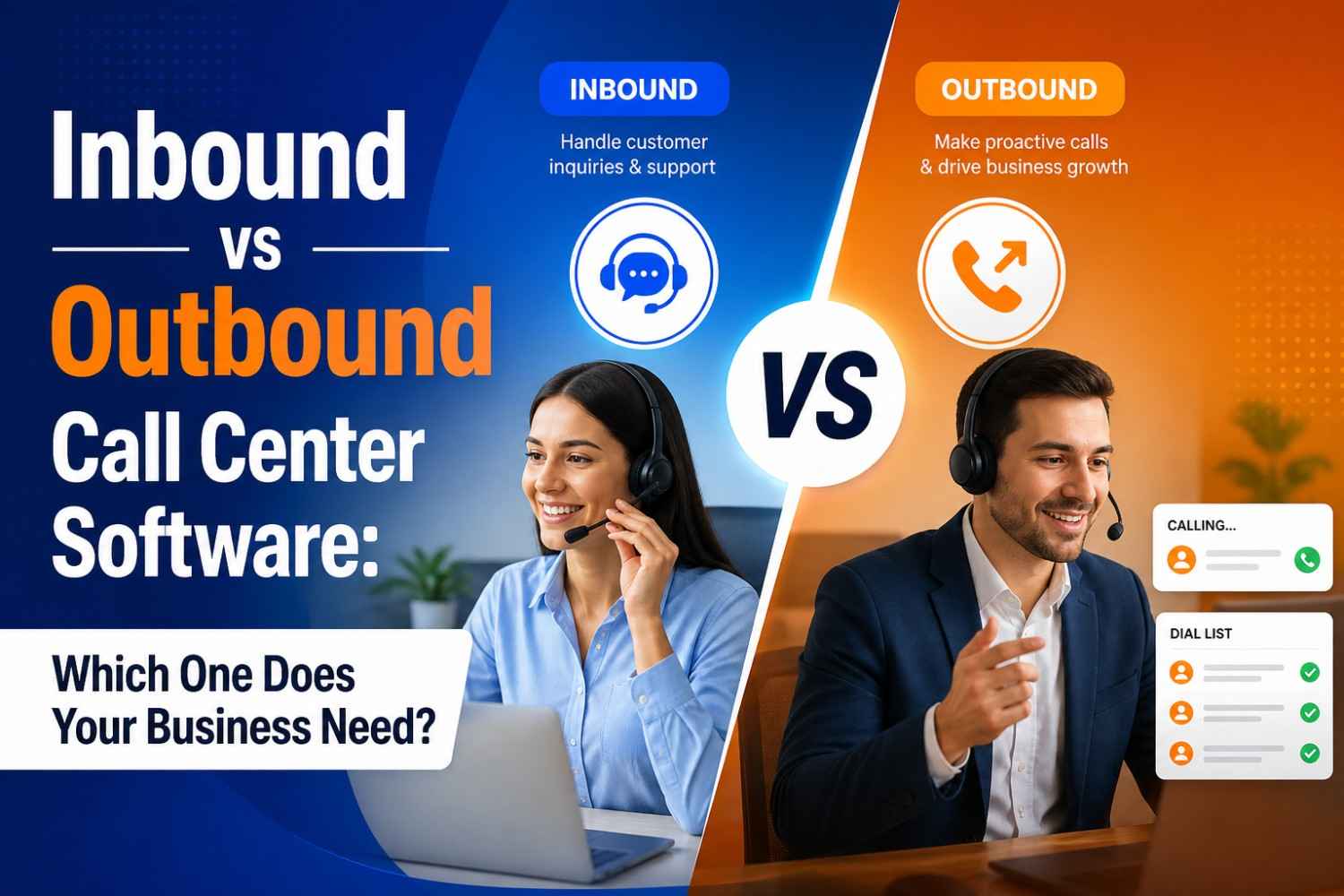
Inbound call center software is built to handle calls that come in to your business from customers, prospects, or anyone else who picks up the phone and dials your number.
The core job of inbound software is to make sure that every incoming call reaches the right person, as quickly as possible, with as little friction as possible. That sounds simple, but at any meaningful scale it requires a lot of intelligent infrastructure working behind the scenes.
When a customer calls your support line, several things need to happen almost instantly. The call needs to be received and acknowledged. The caller needs to be greeted, either by a live agent or an automated menu. The system needs to figure out who this caller is and what they likely need. Then the call needs to be routed to the agent or department best equipped to handle it — and if that agent is busy, the caller needs to be queued in a way that minimizes their wait time and keeps them informed.
All of that is what inbound call center software manages. The technology stack behind it typically includes an IVR system, intelligent call routing, a queue management engine, agent availability tracking, and a customer data layer that surfaces relevant information the moment a call connects.
Done well, inbound software makes your customers feel like calling your business is easy, fast, and worth their time. Done poorly — or using software that was not built for this purpose — it creates the kind of experience that sends customers directly to your competitors.
What Is Outbound Call Center Software?
Outbound call center software is built for the opposite scenario — your agents are the ones initiating calls, reaching out to leads, customers, or contacts from a list.
Where inbound software is about receiving and routing, outbound software is about volume, efficiency, and campaign management. The core job is to help your agents make as many productive calls as possible within a given period, while keeping compliance in check and giving managers full visibility into performance.
The centerpiece of any outbound call center software is the dialer. Whether it is a progressive dialer, a predictive dialer, a power dialer, or a preview dialer, the dialer is what separates outbound software from a simple phone system. It automates the mechanical work of finding numbers, dialing, detecting voicemails and busy signals, and connecting agents only to live answered calls.
Beyond the dialer, outbound software typically includes campaign management tools, contact list segmentation, call outcome logging, CRM integration, real-time supervisor dashboards, and DND compliance filtering.
The goal with outbound software is straightforward: maximize the number of meaningful conversations your agents have every day, and give your team the tools to run those conversations as effectively as possible.
The Core Difference: Reactive vs Proactive
If you want to understand the fundamental difference between inbound and outbound call center software in one sentence, here it is.
Inbound software is reactive. It is built to respond to customers who come to you.
Outbound software is proactive. It is built to help you go to customers.
Everything else — the features, the technology, the metrics, the workflows — flows from that single distinction.
An inbound call center is essentially a service operation. Its success is measured in how quickly calls are answered, how effectively they are resolved, and how satisfied customers feel afterward. The software is optimized for speed of response, accuracy of routing, and quality of service delivery.
An outbound call center is essentially a sales or engagement operation. Its success is measured in how many calls were made, how many connected to real people, what percentage converted, and how efficiently agents moved through their contact lists. The software is optimized for volume, efficiency, and campaign performance.
When you understand this distinction clearly, choosing the right software becomes much easier — because you can look at your team's primary job and immediately know which side of this line you fall on.
Key Features of Inbound Call Center Software
Let us get specific about what inbound software actually includes, because the feature set is meaningfully different from outbound.
IVR — Interactive Voice Response
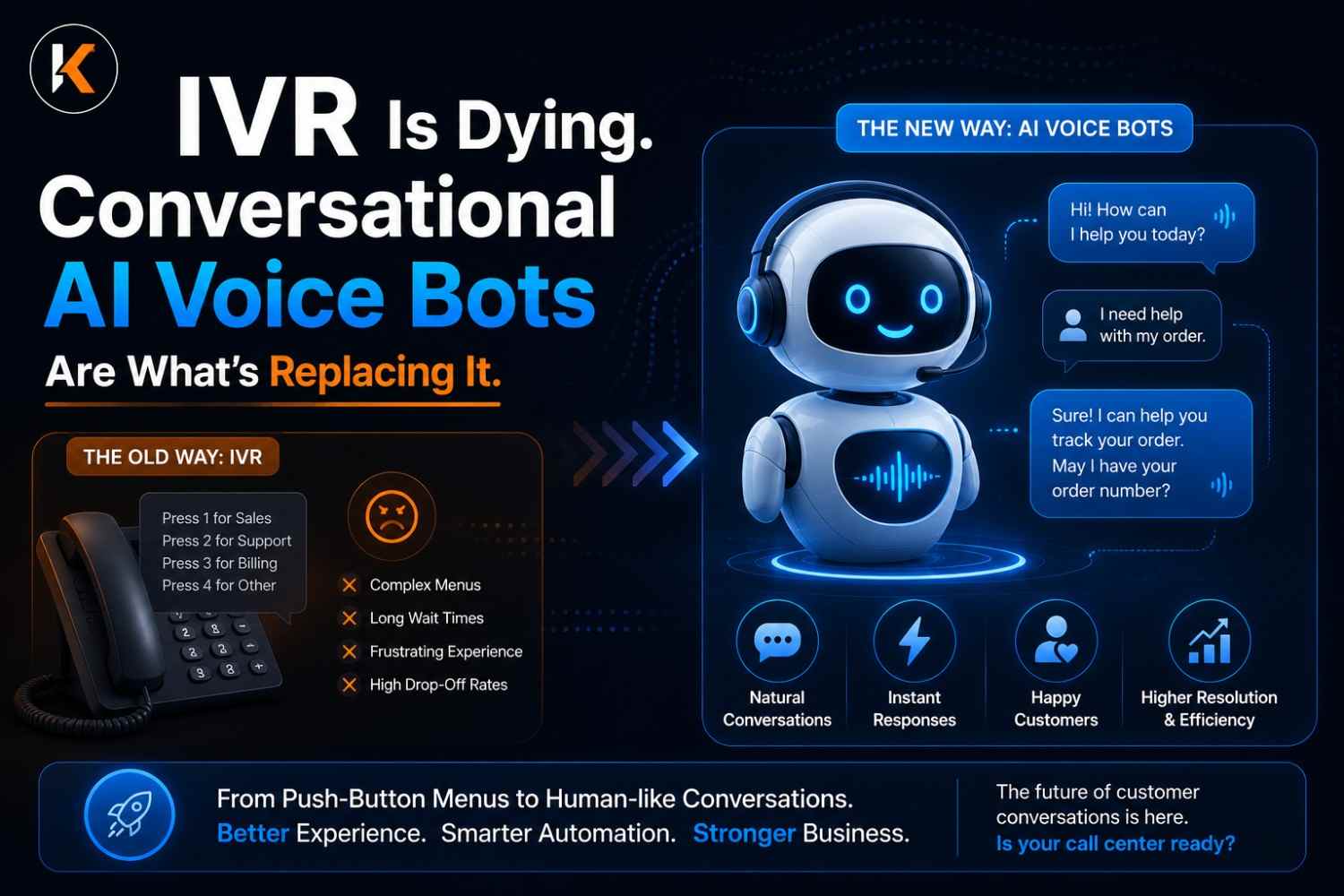
This is the automated menu system that greets callers and helps them self-route to the right department. "Press 1 for sales, press 2 for support, press 3 for billing." When built well, IVR dramatically reduces the load on live agents by handling simple queries automatically and ensuring complex calls reach the right person without being transferred multiple times.
Modern IVR systems have moved well beyond simple keypress menus. They can recognize spoken responses, pull customer data from your CRM to personalize the greeting, and make routing decisions based on the caller's history with your business.
Automatic Call Distribution — ACD
ACD is the engine that decides which agent receives each incoming call. It sounds simple, but the logic behind it can be quite sophisticated. Calls can be routed based on agent skill set, language preference, department, caller priority, time of day, or the specific number the customer dialed.
For a business that handles multiple product lines or operates across multiple cities, a well-configured ACD system is what prevents customers from being bounced between agents who cannot actually help them.
Call Queue Management
When all agents are busy, incoming calls do not just drop — they enter a queue. Call queue management software controls what happens during that wait. Callers hear hold music or informational messages. They receive estimated wait time updates. They may be offered a callback option so they do not have to stay on hold. Queue data feeds into manager dashboards so supervisors can see when wait times are spiking and respond accordingly.
Real-Time Agent Monitoring
Supervisors in an inbound call center need to see what is happening across their team at all times. How many agents are on calls right now. How many are available. How many calls are waiting in the queue. What the average wait time looks like. Which agents have been on particularly long calls. All of this needs to be visible in real time so managers can make live adjustments — moving agents between queues, stepping in on a difficult call, or bringing in additional capacity during a spike.
Customer History and CRM Integration
When a call comes in, the agent should immediately see who is calling and why they might be calling — ideally before they even say hello. This requires the inbound software to integrate with your CRM and surface relevant customer data the moment the call connects. Previous purchases, open support tickets, last interaction date, account status — all of it should be visible to the agent in real time.
Call Recording and Quality Monitoring
For training, compliance, and quality assurance, inbound call centers need robust call recording capabilities. Supervisors should be able to listen to calls live, review recordings afterward, score agent performance against defined criteria, and use those insights to coach their teams.
Key Features of Outbound Call Center Software
Now let us look at what outbound software includes, keeping in mind that the feature priorities are quite different.
Auto Dialer and Predictive Dialer
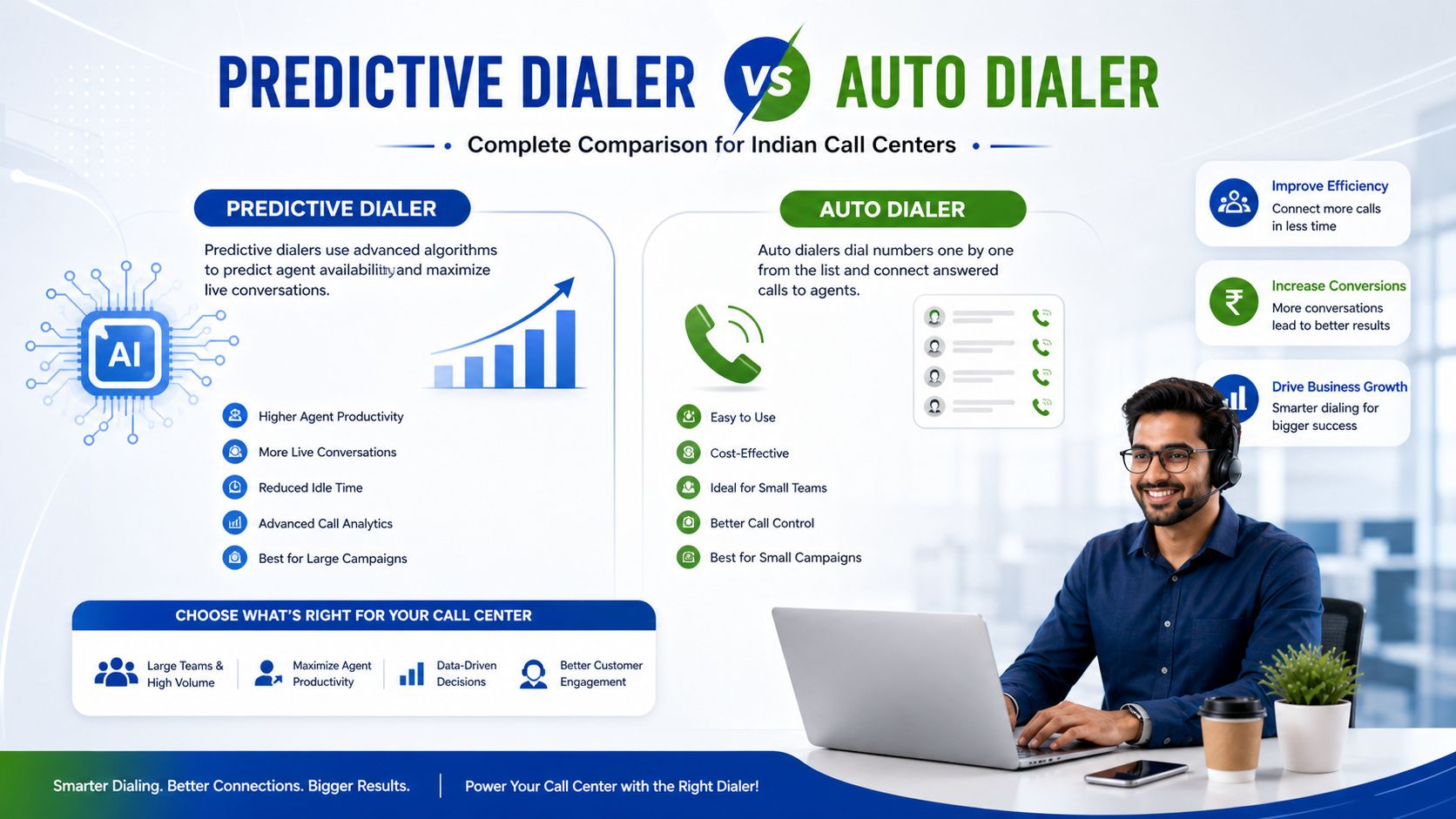
This is the heart of any outbound operation. The dialer automates the mechanical work of placing calls, detects voicemails and busy signals, and connects agents only to live answered calls. The type of dialer — preview, progressive, power, or predictive — determines how aggressively the system dials and how much control agents have over the pace.
We covered this in detail in our previous guide on auto dialer vs predictive dialer, but the short version is: progressive dialers are better for smaller teams and quality-focused campaigns, while predictive dialers maximize volume for large outbound operations.
Campaign Management
Outbound software needs to handle the full lifecycle of a calling campaign. That means uploading and segmenting contact lists, setting dialing schedules, defining call outcomes and dispositions, managing retry logic for unanswered calls, and tracking campaign performance from start to finish.
A good campaign management system lets you run multiple campaigns simultaneously — for example, one campaign targeting new leads and another targeting customers due for renewal — each with its own settings, contact list, and reporting.
DND Compliance Filtering
This is non-negotiable for any outbound operation in India. Before any number is dialed, it must be checked against TRAI's Do Not Disturb registry. Good outbound software handles this automatically and continuously — not just at the start of a campaign but throughout, since DND registrations can be added at any time.
Contact List Management
The quality of an outbound campaign depends heavily on the quality of the contact list. Outbound software should let you upload, clean, deduplicate, segment, and prioritize contact lists easily. You should be able to filter by geography, lead source, previous interaction history, and any other relevant criteria.
Call Outcome Logging and Disposition Codes
After every call, agents need to record what happened. Did the customer express interest? Request a callback? Ask to be removed from the list? Purchase a product? These outcomes — called dispositions — need to be captured quickly and consistently. Good outbound software makes this fast and simple for agents, and aggregates disposition data into campaign-level reports for managers.
Agent Performance Dashboards
Outbound managers need to track performance at the individual agent level — not just overall campaign metrics. Calls made, connect rate, conversion rate, average call duration, and outcomes by agent are all standard metrics. This data helps managers identify top performers, coach struggling agents, and allocate their best people to highest-priority campaigns.
Where Things Get Complicated: Blended Call Centers
Here is where the inbound vs outbound question gets genuinely complicated for many Indian businesses.
A lot of call centers do not fit neatly into one category. A sales team that makes outbound calls to generate leads also needs to receive inbound calls from interested prospects following up. A customer support team that handles inbound complaints also needs to make outbound follow-up calls to resolve issues. A collections department that runs outbound campaigns also needs to field inbound calls from customers wanting to discuss their accounts.
This is called a blended call center, and it is actually the most common setup for mid-sized businesses in India.
If your team operates this way, you need blended call center software — a platform that handles both inbound and outbound calls within the same system, with agents able to switch between modes fluidly.
The advantage of a blended system is efficiency. During a slow inbound period, agents can be automatically shifted to outbound campaigns. During a high-volume inbound spike, outbound dialing can be paused and agents redirected to handle incoming calls. The system manages this dynamically based on real-time demand.
Without a blended system, you end up with two separate platforms that do not share data, require separate training, and create a fragmented view of your customer interactions. That is a significant operational problem as your business grows.
Metrics That Matter: Inbound vs Outbound
The way you measure success is fundamentally different depending on which side of the equation your operation sits on. Understanding these metrics helps clarify which type of software you actually need.
Inbound Metrics
First Call Resolution rate — what percentage of calls are fully resolved without the customer needing to call back. This is the single most important quality indicator for inbound operations.
Average Handle Time — how long agents typically spend on each call, including after-call work. Lower is generally better, but not at the expense of resolution quality.
Average Speed of Answer — how quickly incoming calls are picked up by a live agent. Industry benchmarks typically target under 20 seconds.
Abandoned Call Rate — what percentage of callers hang up before reaching an agent. High abandonment rates indicate queue problems and poor customer experience.
Customer Satisfaction Score — typically measured through post-call surveys. The ultimate measure of inbound call center success.
Outbound Metrics
Calls Made Per Agent Per Day — the basic volume metric. How much ground is being covered.
Connect Rate — what percentage of dialed numbers result in a live conversation. This depends on list quality, time of day, and dialing strategy.
Conversion Rate — what percentage of live conversations result in the desired outcome, whether that is a sale, a confirmed appointment, a payment, or a survey completion.
Abandoned Call Rate — relevant for predictive dialing specifically. Should be kept well below TRAI's regulatory threshold.
Cost Per Conversion — how much it costs in agent time and resources to achieve each successful outcome. The ultimate efficiency metric for outbound operations.
Which One Does Your Business Actually Need?
Let us make this practical.
You need inbound call center software if your primary concern is handling calls that come in to your business — customer support, technical helpdesk, order queries, service requests. Your success metrics are response time, resolution rate, and customer satisfaction. Your team's job is to be available and helpful when customers reach out.
You need outbound call center software if your primary concern is initiating contact with leads, customers, or prospects at scale. Your success metrics are calls made, connect rates, and conversion rates. Your team's job is to proactively reach people and drive a specific outcome.
You need blended call center software if your team regularly does both — making outbound calls and receiving inbound calls within the same shift, sometimes from the same agents. This is the right choice for most mid-sized Indian businesses where the lines between sales, support, and follow-up are not cleanly separated.
How KRUDRA-CX Handles Both
KRUDRA-CX is built as a complete call center solution that covers inbound, outbound, and blended operations within a single platform.
For inbound, KRUDRA-CX includes a full IVR system with smart routing, automatic call distribution, queue management, and real-time agent monitoring — so every incoming call reaches the right person without unnecessary delay.
For outbound, KRUDRA-CX includes auto dialer and predictive dialer capabilities, campaign management, DND compliance filtering, contact list management, and agent performance dashboards — so your team makes more calls, connects with more people, and converts more leads every single day.
And because it is a blended platform, your agents can switch between inbound and outbound modes fluidly, and your managers have a single unified dashboard showing everything that is happening across the entire operation.
No hardware installation. No complex setup. Fully cloud-based, accessible from any device, and designed specifically for Indian call centers.
Book your free demo at krudracx.com and see exactly how it handles your specific setup.
The Bottom Line :-
Inbound and outbound call center software are built for fundamentally different jobs. Inbound software helps you respond to customers who reach out to you. Outbound software helps you proactively reach the people you need to contact. Most growing Indian businesses eventually find that they need both — and a blended platform is the most efficient way to handle that reality without managing two separate systems.
The most important thing is to be honest about what your team actually does, choose software that matches that reality, and stop trying to force an outbound-first tool to handle a support-heavy operation, or vice versa. Get the right foundation in place, and everything else — performance, productivity, customer experience — follows from there.